
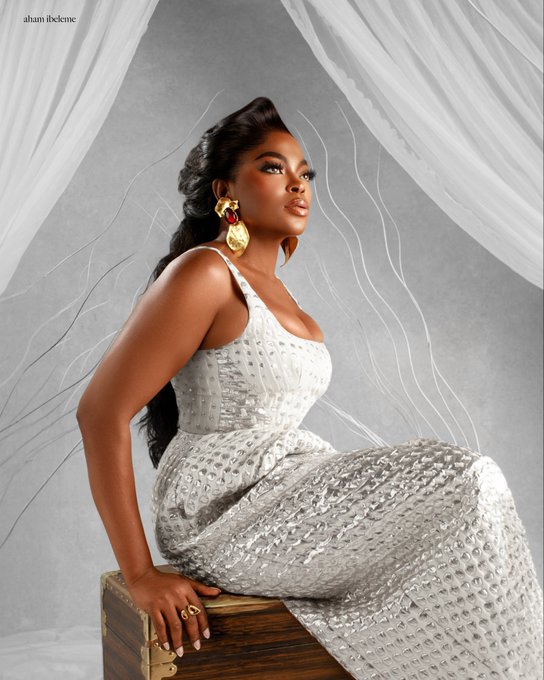
The Nigerian entertainment industry and social media have been thrown into a fresh debate following criticism directed at Nollywood actress and filmmaker Funke Akindele over her birthday celebration on the same day veteran actor Taiwo Hassan, popularly known as Ogogo, was laid to rest.
The controversy began after Funke Akindele shared a birthday message and photos to mark her special day while family members, colleagues and fans were mourning the passing and burial of the veteran Yoruba actor. Ogogo died on August 23, 2026, at the age of 66, and was buried in Ilaro, Ogun State, on August 24. His death triggered an outpouring of grief across the Nigerian entertainment industry.
While many Nigerians wished Funke Akindele a happy birthday and defended her right to celebrate another year of life, others questioned whether the timing of her public celebration showed enough sensitivity considering the industry was mourning one of its respected veterans.
One of those who expressed disappointment was X user AMICABLU, known by the handle @Gbalode_.
According to the user, Funke Akindele celebrating her birthday on the same day Ogogo’s burial ceremony was taking place did not sit well with them.
“Funke Akindele celebrating her birthday on the same day the burial ceremony of veteran actor Taiwo Hassan ‘Ogogo’ is being held doesn’t sit well with me. For someone of her stature and influence in the Nigerian entertainment industry, I expected a little more sympathy and sensitivity. At times like this, some situations call for restraint and respect.”
The comment reflects one side of a growing debate: Should a public figure tone down personal celebrations when an important colleague in the same industry has just passed away?
A Painful Moment for the Nigerian Entertainment Industry
There is no doubt that the death of Taiwo Hassan, popularly known as Ogogo, is a significant loss to the Nigerian movie industry.
For decades, Ogogo built a reputation as one of the most recognisable faces in Yoruba cinema. His performances made him a household name, and his contribution to the growth of the industry earned him respect among colleagues and fans.
His death therefore came as a painful moment for many people who grew up watching him on television and in movies.
According to reports, his burial attracted family members, friends and several colleagues from the entertainment industry, as the industry paid its final respects to the veteran actor.
For critics like AMICABLU, the issue was not necessarily that Funke Akindele had no right to celebrate her birthday. Instead, the concern was about the timing and the public nature of the celebration.
In their view, there are moments when personal happiness and public mourning collide, and people—especially influential public figures—may be expected to show restraint.
Is It Wrong to Celebrate a Birthday During a Period of Mourning?
This is where the debate becomes complicated.
On one side are those who believe that Funke Akindele should have considered postponing her public birthday celebration or keeping it more private out of respect for Ogogo.
On the other side are those who believe that it is unfair to expect someone to cancel their birthday simply because another person has died.
Both arguments have generated strong reactions online.
Those defending Funke Akindele argue that life does not stop when someone dies. Every day, people experience both happiness and sadness. While one family may be mourning, another family may be welcoming a new baby. While someone is attending a burial, another person may be getting married or celebrating a birthday.
In fact, several social media users argued that it is possible to mourn a respected actor while still allowing another person to celebrate a personal milestone. Reports on the reactions show that many Nigerians defended Akindele, saying her birthday did not invalidate the grief surrounding Ogogo’s death.
That argument is also valid.
Funke Akindele did not choose the date of her birth. Her birthday comes once a year, and celebrating another year of life is something deeply personal.
However, those criticising her are focusing on something different: emotional sensitivity.
They argue that sometimes, being technically free to do something does not automatically mean the timing will be appreciated by everyone.
The Importance of “Reading the Room”
One phrase that has repeatedly appeared in conversations about this controversy is “read the room.”
This simply means understanding the emotional atmosphere surrounding a particular moment.
For example, there may be nothing wrong with celebrating an achievement, but announcing it loudly during a national tragedy may be considered insensitive by some people.
Likewise, there may be nothing wrong with throwing a party, but doing so immediately after a close family member or colleague has died could make people uncomfortable.
The question surrounding Funke Akindele is therefore not necessarily about whether she had the right to celebrate.
The bigger question is whether a public figure of her stature should consider the wider emotional situation before making certain posts.
AMICABLU clearly believes she should.
“For someone of her stature and influence in the Nigerian entertainment industry, I expected a little more sympathy and sensitivity,” the user wrote.
It is an opinion shared by several other people who felt the industry should have focused entirely on paying tribute to Ogogo on the day he was being buried.
But Should People Police How Others Grieve?
There is also another important side to this conversation.
People do not grieve in the same way.
Some people express their sadness publicly. Others keep it private.
Some people attend funerals. Others send messages. Some post tributes on social media. Others may choose not to post anything at all.
Should the public then decide how much grief a celebrity must display before they are considered caring?
This is a difficult question.
Funke Akindele’s supporters argue that celebrating her birthday does not automatically mean she did not respect Ogogo or feel sympathy for his family.
A person can be sad about someone’s death and still acknowledge their own birthday.
Human emotions are complicated.
Someone can cry in the morning and laugh in the afternoon.
Someone can attend a burial and still go home to celebrate a child’s birthday.
Life often contains joy and sadness at the same time.
That is why many people have argued that Nigerians should be careful about judging another person’s emotions solely based on what they post online.
The Pressure of Being a Celebrity
For celebrities, situations like this are even more complicated because almost everything they do is examined publicly.
If a celebrity posts a birthday picture, people analyse it.
If they remain silent, people ask why they have not spoken.
If they post a tribute, others may question whether the tribute is sincere.
This is the reality of being a public figure.
Funke Akindele is one of the biggest names in Nollywood. Because of her influence, her actions naturally attract more attention than those of an ordinary person.
That is likely one reason why AMICABLU and others expected her to demonstrate a higher level of sensitivity.
However, fame should also not completely remove a person’s right to live their own life.
A celebrity is still a human being with birthdays, family responsibilities, personal struggles and moments of happiness.
The public may have opinions about how celebrities should behave, but there must also be room for personal freedom.
A Lesson About Social Media Reactions
One important lesson from this controversy is how quickly social media can turn a personal moment into a national debate.
A birthday post that may have taken only a few minutes to upload suddenly became the subject of arguments about morality, grief, humanity, respect and emotional intelligence.
This is the power—and sometimes the danger—of social media.
People often see only a small part of a person’s life online and immediately form strong conclusions.
We may not know what conversations Funke Akindele had privately.
We may not know whether she personally reached out to Ogogo’s family.
We may not know how she felt about his death beyond what she chose to share publicly.
Therefore, while people are free to express their opinions, it is important not to confuse social media activity with the complete reality of someone’s emotions.
The Debate Will Continue
The controversy surrounding Funke Akindele’s birthday celebration and Ogogo’s burial highlights a larger question about public life and personal freedom.
When should people celebrate, and when should they show restraint?
There may never be a single answer.
AMICABLU’s criticism represents the view that certain moments require public figures to put aside personal celebrations temporarily in order to show solidarity and respect.
Others strongly disagree, arguing that grief and celebration can exist at the same time.
Perhaps the most balanced conclusion is that both perspectives deserve consideration.
Yes, public figures should be aware of the emotional climate around them.
At the same time, the public should avoid demanding that people completely suspend their lives because of every tragedy.
Taiwo Hassan “Ogogo” will be remembered for his contribution to Nigerian cinema and the many lives he touched through his work. His death remains a painful loss to his family, friends, colleagues and fans.
But the conversation surrounding Funke Akindele’s birthday is a reminder that grief, respect, celebration and personal freedom often exist side by side in society.
For some, her birthday post was insensitive.
For others, it was simply a woman celebrating another year of life.
And perhaps that is why the debate has become so intense: there is a difference between having the right to do something and people agreeing with the timing of it.
What remains certain is that the conversation about sensitivity, celebrity behaviour and how Nigerians respond to death will continue long after the social media arguments have moved on.