
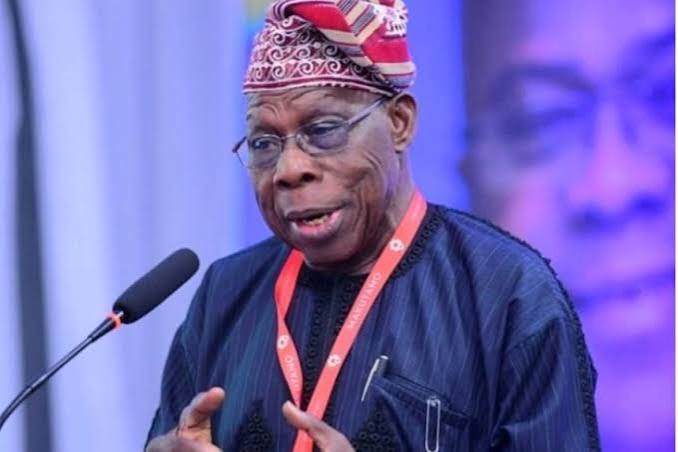
Former Nigerian President Olusegun Obasanjo has once again generated widespread reactions after a video surfaced showing him insisting on sitting in a seat reportedly reserved for the Ooni of Ife during a public event.
The incident, which has quickly become a major topic of discussion on social media, saw the former President make a strong statement about protocol, hierarchy and the honour accorded to the office of the President.
According to the video, Obasanjo insisted that when a President is present at an event, the President should be accorded greater honour than any traditional ruler.
“When a President is present, you give him more honour than any king,” Obasanjo reportedly said.
The statement immediately sparked mixed reactions, with Nigerians debating the place of traditional institutions in modern Nigeria and whether political office should always take precedence over the country’s revered monarchs.
The Moment That Sparked the Conversation
The video shows Obasanjo at an event where seating arrangements appeared to become an issue. A particular seat had reportedly been reserved for the Ooni of Ife, one of Nigeria’s most highly respected traditional rulers.
However, Obasanjo reportedly insisted on sitting in the seat, leading to an exchange that caught the attention of people present at the event.
For many Nigerians, the moment was more than just a disagreement over a chair. It opened up a larger conversation about respect, authority, culture, tradition and political power.
Obasanjo, who served as Nigeria’s President from 1999 to 2007 during the country’s Fourth Republic, is known for his outspoken personality and strong views on leadership and national affairs.
Even years after leaving office, the former President remains one of the most influential and recognisable political figures in Nigeria.
His latest comments have now placed him at the centre of another national conversation.
“More Honour Than Any King”
The strongest part of the incident was Obasanjo’s statement that a President should receive greater honour than any king when present at a public gathering.
The statement reflects the structure of Nigeria’s constitutional democracy, where the President is the country’s highest political officeholder and represents the executive authority of the Federal Republic of Nigeria.
From a government and constitutional perspective, the office of the President occupies a central position in the country’s political structure.
However, Nigeria is also a nation deeply rooted in culture and tradition.
Traditional rulers, including kings, emirs and obas, remain highly respected figures within their communities and across the country. They represent centuries of history, culture, identity and heritage.
This is why the incident has attracted such strong reactions.
For some Nigerians, Obasanjo’s statement was simply a reminder of official protocol.
They argued that while traditional rulers deserve enormous respect, elected political leaders, particularly the President, occupy a different position within the structure of the Nigerian state.
Others, however, believe that traditional institutions should not be treated as inferior simply because Nigeria operates a modern democratic system.
The Special Place of the Ooni of Ife
The Ooni of Ife occupies one of the most respected traditional stools in Nigeria.
Ile-Ife is widely regarded as an important centre of Yoruba history and culture, and the Ooni is seen by many Yoruba people as a highly significant custodian of tradition.
Because of this historical and cultural importance, any issue involving the Ooni’s seat, position or protocol is likely to attract public attention.
To many people, a seat reserved for the Ooni is not just an ordinary chair. It symbolises the dignity and importance attached to the traditional institution.
This is one reason why the video involving Obasanjo has generated debate.
Some social media users questioned whether the former President should have insisted on taking a seat reserved for the monarch.
Others argued that the organisers of the event should have made clearer arrangements to avoid any confusion or embarrassment.
Nigerians React on Social Media
As clips and reports of the incident circulated online, Nigerians began sharing different opinions.
Some defended Obasanjo, saying his position was based on established protocol and the respect attached to the office of a President.
Supporters of this view argued that Nigeria is a constitutional democracy and that political authority must be properly recognised at official functions.
Others disagreed strongly.
They argued that traditional rulers should never be publicly embarrassed or treated with less dignity because of political office.
Some also pointed out that Nigeria’s traditional institutions existed long before the modern Nigerian state and continue to play important roles in maintaining peace, resolving community disputes and preserving cultural values.
The debate also led to humorous reactions online, with many Nigerians sharing memes and comments about Obasanjo’s well-known confidence and bold personality.
For many people, the incident was another reminder that Obasanjo is not afraid to express his opinion, regardless of who is involved.
Politics and Tradition: A Delicate Relationship
Nigeria has always had a complex relationship between political authority and traditional leadership.
The country operates under a democratic constitution, with elected officials responsible for governance and public administration.
At the same time, traditional rulers continue to command respect and influence within their communities.
Many political leaders regularly consult traditional rulers, especially during elections, major community decisions and periods of crisis.
Traditional rulers often act as bridges between governments and local communities.
They may not possess the same constitutional powers as elected political leaders, but their influence cannot be ignored.
This is why issues involving protocol between political leaders and monarchs can sometimes become sensitive.
A President may hold the highest political office in the country, but a king or traditional ruler may hold enormous cultural and historical significance.
Finding the right balance between these two institutions remains important.
Obasanjo’s Reputation for Speaking His Mind
The incident is also consistent with Obasanjo’s long-standing public image.
Throughout his political career, the former President has developed a reputation for being direct and outspoken.
He has often expressed strong opinions on governance, leadership, corruption, democracy and national development.
Even after leaving office, Obasanjo has continued to participate actively in conversations about Nigeria’s future.
His latest comments have once again shown why he remains one of the country’s most talked-about former leaders.
Whether people agree with him or not, Obasanjo’s words often generate national conversations.
A Debate Beyond the Seat
At the end of the day, the controversy surrounding the seat reserved for the Ooni may be about more than where Obasanjo sat.
The incident has reopened important discussions about respect, authority and identity in Nigeria.
Should political protocol always take precedence over traditional protocol?
Can a President and a revered traditional ruler both be honoured without creating a competition over who deserves more recognition?
And should event organisers do more to ensure that proper arrangements are made before high-profile personalities arrive?
These are some of the questions Nigerians are now asking.
One thing is certain: the incident involving former President Olusegun Obasanjo and the seat reportedly reserved for the Ooni of Ife has once again demonstrated how deeply Nigerians value both political leadership and traditional institutions.
While Obasanjo’s statement that “when a President is present, you give him more honour than any king” has sparked controversy, it has also created an opportunity for Nigerians to reflect on the relationship between modern democracy and centuries-old traditions.
As reactions continue to pour in, the debate is unlikely to end anytime soon.
After all, in Nigeria, matters involving presidents, kings, culture and respect are rarely just about a chair.
What do you think? Was Obasanjo right to insist that a President should receive more honour than any traditional ruler, or should traditional institutions be given equal respect regardless of political office? Share your thoughts in the comments.