
Nigeria’s long-running debate over fuel subsidy has once again taken centre stage, with strong arguments emerging over what a return to subsidy could mean for the country’s economy, petroleum industry and investment climate.
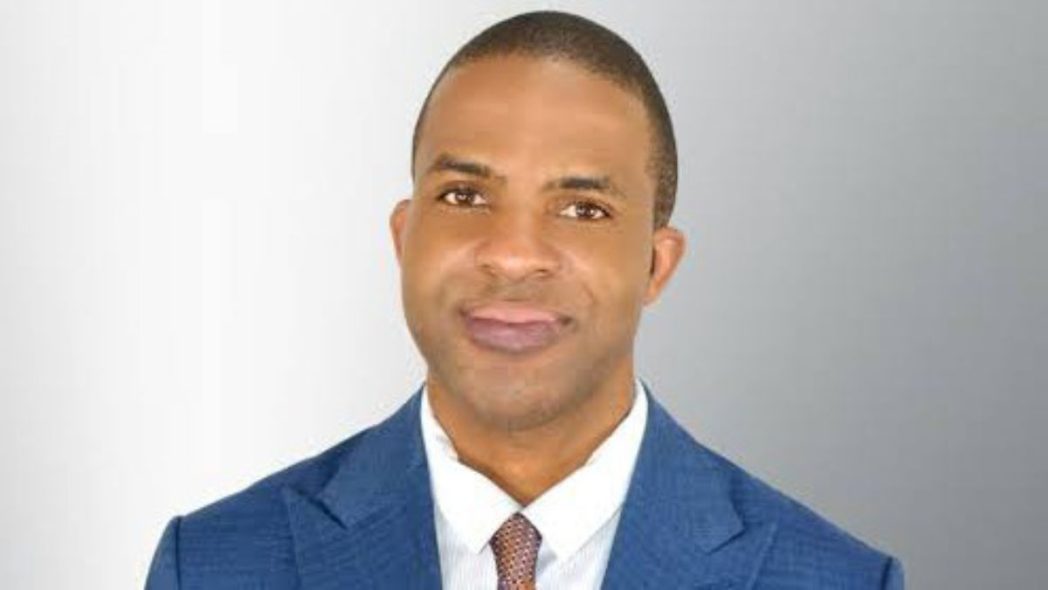
In a recent commentary, Arise News journalist and analyst Rotus Oddiri criticised former Vice President Atiku Abubakar’s position on subsidy, describing it as “economic populism” and warning that returning to a subsidy regime could negatively affect Nigeria’s oil and gas sector.
Oddiri’s argument centres on a fundamental question that has shaped Nigeria’s economic conversation for decades:
Should the government continue subsidising the price of petrol, or should Nigerians pay a price that more closely reflects the cost of supplying the product?
The issue is far more complicated than simply deciding whether petrol should be cheap or expensive.
It involves government finances, inflation, transportation costs, household incomes, domestic refining, private investment and the future of Nigeria’s petroleum industry.
At the centre of the current debate is also the Dangote Refinery, which has become one of the most significant private-sector investments in Nigeria’s oil and gas industry.
Why Fuel Subsidy Is Such a Sensitive Issue
Fuel subsidy has historically been one of the most politically sensitive economic policies in Nigeria.
The basic idea behind a petrol subsidy is straightforward.
The government absorbs part of the cost of supplying petroleum products so that consumers can purchase petrol at a lower price.
On the surface, this appears attractive.
Cheap petrol means lower transportation costs.
Lower transportation costs can reduce the cost of moving food and goods.
Workers may spend less money commuting.
Businesses may face lower operating costs.
And households may have more money available for other expenses.
The problem is the cost of maintaining such a system.
When the government subsidises petrol, it must find the money to pay for that subsidy.
In a country with limited public revenue and significant infrastructure and social spending needs, large subsidy bills can place considerable pressure on government finances.
This is one of the reasons subsidy has remained controversial.
The question is not simply whether subsidy helps Nigerians.
The bigger question is:
Who ultimately pays for it, and what does the country have to sacrifice to maintain it?
The Argument Against Returning to Subsidy
Rotus Oddiri’s criticism is based largely on the argument that returning to subsidy could distort the petroleum market and discourage private investment.
His warning is particularly focused on the refining sector.
According to the statement attributed to him, a return to subsidy could severely affect the oil and gas sector and potentially undermine the environment needed for major private investments.
The Dangote Refinery is the most obvious example.
The refinery represents a major investment in Nigeria’s petroleum industry and is expected to play an important role in increasing domestic refining capacity.
If government policy makes imported or subsidised petrol artificially cheaper than the economic price of locally refined products, private refiners could face a difficult operating environment.
Why?
Because a refinery is a commercial investment.
It requires enormous capital expenditure, access to crude oil, infrastructure, workers, technology and a market willing to purchase its products.
Investors need confidence that the market will allow them to recover their investment and generate reasonable returns.
If government intervention makes prices unpredictable or significantly reduces potential margins, investors may become more cautious.
That is the heart of Oddiri’s argument.
The Dangote Refinery Question
The Dangote Refinery has become a symbol of Nigeria’s ambition to transform its petroleum industry.
For decades, Nigeria has been one of the world’s major crude oil producers while simultaneously depending heavily on imported refined petroleum products.
That contradiction has been one of the country’s most frustrating economic realities.
Nigeria exports crude oil but has historically struggled to refine enough petrol, diesel and other petroleum products domestically.
A large-scale refinery operating successfully could change that dynamic.
It could increase domestic refining capacity, reduce dependence on imported petroleum products and potentially create opportunities across the wider oil and gas value chain.
But a refinery of this scale needs a predictable business environment.
Investors do not only look at the size of the market.
They look at government policies.
They examine taxes.
They consider regulations.
They assess exchange-rate risks.
They study competition.
And they ask whether the rules today will remain relatively stable tomorrow.
This is why the subsidy debate matters to the refining industry.
Would Subsidy Really Stop Investment?
This is where the argument requires nuance.
It would be too simplistic to say that any return of subsidy would automatically mean that the Dangote Refinery would stop operating or that no investor would ever invest in Nigeria’s refinery sector again.
Investment decisions are influenced by many factors.
Crude oil availability matters.
Refining margins matter.
Government regulations matter.
Exchange rates matter.
Demand matters.
Infrastructure matters.
Export opportunities also matter.
A refinery can potentially sell products beyond the domestic market, depending on economics and trade conditions.
Therefore, the relationship between subsidy and investment is not necessarily as simple as one policy automatically destroying another.
However, Oddiri’s broader concern remains important.
Unpredictable or heavily distorted pricing policies can create uncertainty for private investors.
Investors generally prefer transparent and predictable markets.
If government repeatedly changes the rules governing petroleum prices, taxes, imports and subsidies, businesses may find it more difficult to forecast future revenues.
That uncertainty can affect investment decisions.
The Other Side: Why People Want Subsidy
To understand the political appeal of subsidy, it is important to understand the reality facing ordinary Nigerians.
Fuel prices affect almost everything.
When petrol becomes more expensive, transportation costs often rise.
When transportation becomes more expensive, the cost of moving food from farms to cities can increase.
Businesses that rely on generators or transportation may face higher operating costs.
Workers may spend more money commuting.
Students may spend more getting to school.
Families may struggle with rising household expenses.
This creates a painful economic chain.
For someone earning a low or modest income, an increase in petrol prices is not an abstract economic statistic.
It can affect whether they can afford to go to work.
It can affect how much food they can buy.
It can affect whether a small business remains profitable.
This is why politicians who advocate policies aimed at reducing fuel prices can receive significant public attention.
For millions of Nigerians, the immediate question is not whether a subsidy regime is theoretically efficient.
The question is:
“How am I going to survive?”
Populism or Social Protection?
This is where the political debate becomes complicated.
Critics may describe subsidy as populist because it provides immediate price relief without necessarily addressing deeper structural problems.
Supporters may argue that subsidy is a form of social protection.
Both arguments deserve consideration.
A government cannot simply tell citizens to accept higher living costs because an economic policy is theoretically better.
There must be mechanisms to protect vulnerable households.
If subsidy is removed, citizens may reasonably ask what they receive in return.
Are public transportation systems improving?
Are wages increasing?
Are social programmes reaching the poorest households?
Is electricity becoming more reliable?
Are local industries expanding?
Are food production and distribution costs falling?
These questions matter.
Economic reform is easier to accept when citizens can see a credible pathway from today’s hardship to tomorrow’s improvement.
The Real Problem May Be More Than Subsidy
Nigeria’s petroleum challenges did not begin with the recent subsidy debate.
The country has struggled for years with issues surrounding crude oil production, refinery maintenance, pipeline infrastructure, fuel distribution, exchange rates, electricity generation and government revenue.
Removing subsidy does not automatically solve all these problems.
Similarly, restoring subsidy would not automatically solve them either.
The country needs a broader petroleum and economic strategy.
That strategy should include efficient domestic refining, transparent petroleum pricing, improved crude oil production, stronger infrastructure and effective regulation.
It should also address the welfare of ordinary citizens.
The goal should be to create an energy system that can operate efficiently without placing an unsustainable burden on public finances.
What Investors Are Watching
One of the strongest points in the argument concerns investor confidence.
Investment thrives where there is predictability.
A company considering investing billions of dollars in a refinery wants to know what the market will look like in five, ten or twenty years.
Will fuel prices be determined by market forces?
Will government suddenly introduce a new subsidy?
Will importers receive preferential treatment?
Will domestic refiners have access to crude?
Will regulations change unexpectedly?
Will the government honour existing agreements?
These questions influence investment decisions.
Nigeria needs both local and international investors to participate in developing its energy sector.
If investors believe that government policies can change dramatically whenever political pressure increases, they may demand higher returns to compensate for the risk.
Some may decide to invest elsewhere.
This is not unique to Nigeria.
It is a basic principle of investment.
But Government Still Has a Responsibility
The argument against subsidy should not be interpreted as an argument for government to abandon citizens to market forces.
Government still has a responsibility to create policies that protect vulnerable Nigerians.
If the country decides that subsidy is financially unsustainable, alternative measures should be credible and transparent.
Public transportation could be expanded.
Targeted cash transfers could be improved.
Small businesses could receive support.
Local manufacturing could be encouraged.
Energy infrastructure could be strengthened.
Workers could receive measures that help them cope with rising costs.
The objective should be to replace a broad and potentially expensive price subsidy with more targeted forms of economic support.
That way, assistance can reach people who actually need it rather than disproportionately benefiting those who consume more fuel.
The Dangote Refinery and a New Economic Chapter
The emergence of large-scale private refining capacity presents Nigeria with a historic opportunity.
Instead of repeatedly discussing how to subsidise imported petrol, the country can focus on building a petroleum industry capable of producing more of what Nigerians consume.
A strong domestic refining industry could create jobs, stimulate supporting industries and potentially generate export opportunities.
But the refinery’s success should not depend entirely on government protection.
A competitive and transparent market is important.
Domestic producers should be able to compete fairly.
Consumers should have access to products at reasonable prices.
Regulators should ensure that market power is not abused.
And government should provide a stable policy environment.
If these conditions are achieved, Nigeria could gradually move from being primarily a crude oil exporter and refined-product importer toward becoming a major regional refining and petroleum-products hub.
The Political Challenge for Atiku Abubakar
Atiku Abubakar’s position on subsidy, like any major economic proposal, will be judged not only by economists but by voters.
The political challenge is explaining how cheaper petrol would be funded and what the long-term consequences would be.
If subsidy returns, where will the money come from?
Will government increase borrowing?
Will other areas of public spending be reduced?
Will taxes rise?
Will oil revenues be sufficient?
What happens if global oil prices fall?
These are questions that any government advocating a subsidy policy would need to answer.
At the same time, opponents of subsidy must explain how ordinary Nigerians will survive if petrol prices remain high.
It is not enough to say subsidy is expensive.
Citizens need to know what replaces it.
Nigeria Needs a Sustainable Middle Ground
Perhaps the most important lesson from this debate is that Nigeria should avoid simplistic economic arguments.
The country needs affordable energy.
The country also needs sustainable public finances.
It needs private investment.
It needs consumer protection.
It needs domestic refining.
It needs infrastructure.
And it needs policies that can survive changes in political leadership.
These goals must be balanced.
Returning to an expensive blanket subsidy without addressing its underlying problems could recreate old fiscal pressures.
Removing subsidy without adequate support for vulnerable Nigerians can create severe social and economic hardship.
The answer therefore requires more than political slogans.
It requires serious economic planning.
Final Thoughts
Rotus Oddiri’s warning about subsidy and the Dangote Refinery has opened another chapter in Nigeria’s long-running debate over how the country should manage its petroleum economy.
His argument is that returning to subsidy could undermine investment, distort the oil and gas market and make major projects such as the Dangote Refinery more difficult to operate profitably.
Whether one completely agrees with that assessment or not, the underlying issue deserves serious discussion.
Nigeria cannot afford to make economic policy based solely on short-term political popularity.
At the same time, economic reforms cannot ignore the suffering of ordinary citizens.
The country needs a system where businesses can invest with confidence, refiners can operate competitively and consumers can access energy without unbearable costs.
The real goal should therefore be bigger than the question of “subsidy or no subsidy.”
The goal should be building an energy economy that is productive, competitive, transparent and sustainable.
If Nigeria can achieve that, the country may finally begin to turn its enormous petroleum resources into broad-based economic prosperity.
And if it cannot, the subsidy debate will likely continue repeating itself for another generation—changing governments, changing politicians and changing slogans, while Nigerians continue to ask the same fundamental question:
How can a country blessed with so much oil build an energy system that works for everyone?