
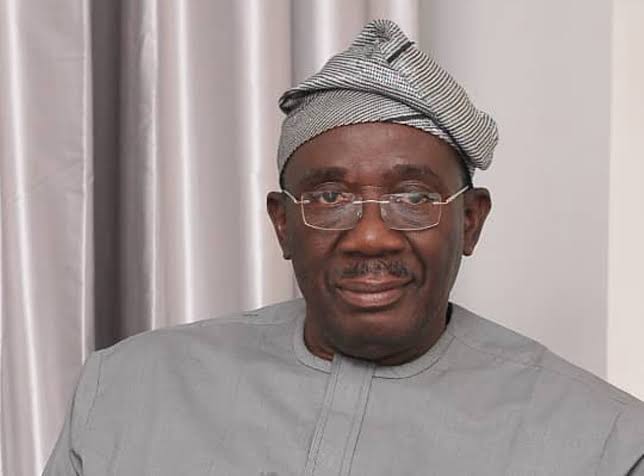
Senator Adenigba Fadahunsi, OFR, has apologised for the tension generated by remarks he made during a campaign visit to the palace of the Paramount Ruler of Ijesaland, Owa Clement Adesuyi Haastrup, Ajimoko III.
The senator’s statement comes amid public discussion surrounding comments made during his visit to the traditional institution and the interpretation of his words in the aftermath of the Osun State governorship election.
In a clarification following the conclusion of the election, Fadahunsi explained that his visit to the palace was primarily motivated by a desire to seek justice and express his pain over the killing of members of his political party.
The senator also denied calling for violence, stressing that his remarks should not be interpreted as an attempt to encourage confrontation or disorder.
At the same time, he acknowledged that the way his concerns were expressed created tension and therefore offered an apology.
The development has drawn attention to the delicate relationship between political activity, traditional institutions and the responsibility of public figures to communicate carefully, particularly during emotionally charged periods.
Fadahunsi Addresses the Controversy
Political campaigns can be intense, especially when elections involve strong competition between parties and candidates.
For politicians and supporters alike, emotions can run high.
The period leading up to an election often involves rallies, political meetings, accusations and counter-accusations. When incidents involving violence or the loss of lives occur, the situation can become even more sensitive.
It was against this background that Senator Fadahunsi visited the palace of Owa Clement Adesuyi Haastrup.
According to the senator’s explanation, the purpose of the visit was not simply political campaigning.
He wanted to seek justice and communicate his pain over the deaths of members of his political party.
For him, the deaths were a serious matter that required attention and accountability.
However, some of his remarks during the visit generated tension and were interpreted by some people as potentially inflammatory.
The senator has now clarified his position.
Rather than allowing the controversy to continue without explanation, he has apologised for the tension his comments caused.
That apology is significant because public officials carry a special responsibility when speaking in sensitive environments.
Denial of Any Call for Violence
One of the central points in Fadahunsi’s clarification is his denial that he called for violence.
Political statements can sometimes be interpreted differently depending on the circumstances in which they are made.
A statement made during a tense political period may attract a different reaction from one made during a calm period.
The senator therefore sought to make his position clear.
He said his intention was to express his pain and seek justice following the killings of members of his political party, rather than encourage anyone to engage in violence.
This distinction is important.
Calling for accountability after the loss of lives is fundamentally different from encouraging people to take the law into their own hands.
In a democratic society, political disagreements should be resolved through lawful institutions, dialogue and the electoral process.
Violence has consequences that extend far beyond political campaigns.
It can destroy communities, damage relationships and leave families dealing with permanent loss.
This is why statements from political leaders must be carefully considered.
Even when a politician is speaking from genuine anger or grief, the words used can influence supporters and members of the public.
The Role of Traditional Institutions
The controversy also highlights the important role traditional rulers continue to play in Nigerian society.
Traditional institutions occupy a unique position.
They are not political parties, yet they often serve as important centres of community leadership.
Traditional rulers may provide platforms for dialogue between politicians, community leaders and citizens.
Their palaces can become places where political actors express concerns, seek support or discuss issues affecting their communities.
At the same time, traditional institutions must carefully navigate politically sensitive situations.
A traditional ruler may receive politicians from different parties without necessarily endorsing their political positions.
The palace is expected to remain a place where people can seek guidance, peace and dialogue.
In this case, Fadahunsi’s decision to visit the palace demonstrates the continued significance of the institution of the Owa of Ijesaland.
His subsequent commendation of Owa Haastrup’s leadership also appears to acknowledge the traditional ruler’s role in maintaining stability and providing direction within Ijesaland.
Commending Owa Haastrup’s Leadership
Following the controversy, Senator Fadahunsi commended the leadership of Owa Clement Adesuyi Haastrup, Ajimoko III.
This aspect of the statement is particularly noteworthy.
Rather than allowing his earlier comments to permanently define his relationship with the traditional institution, Fadahunsi has chosen to acknowledge the leadership of the Owa.
Owa Haastrup occupies an important traditional position in Ijesaland, and his role goes beyond individual political interests.
Traditional rulers are expected to provide stability, encourage peaceful coexistence and protect the interests of their communities.
For a politically active senator to publicly commend such leadership, it can be viewed as an attempt to reinforce the importance of unity and respect for traditional authority.
It also helps to shift the conversation away from confrontation and towards reconciliation.
Politics and the Responsibility of Public Statements
The episode offers a broader lesson about political communication.
Politicians have significant platforms.
When a senator speaks, people listen.
When a governor speaks, people listen.
When a traditional ruler speaks, people listen.
This influence comes with responsibility.
During election periods, words can be particularly powerful.
Supporters may interpret statements literally.
Opponents may analyse every phrase.
Social media can amplify individual sentences without the full context of the original speech.
A comment made in a moment of frustration can therefore travel much further than the speaker expected.
This is one reason political leaders are increasingly expected to exercise caution in their public communication.
The objective should not be to suppress genuine emotions.
Politicians should be able to express anger, disappointment and concern.
But those emotions should be communicated in a way that does not encourage hostility or violence.
Seeking Justice Through Lawful Means
Fadahunsi’s explanation that he visited the palace to seek justice raises an important question: what does justice look like after political violence?
For families who lose loved ones, justice is more than a political slogan.
They want answers.
They want investigations.
They want accountability.
They want to know who was responsible.
They want assurance that similar incidents will not happen again.
These concerns should be taken seriously regardless of political affiliation.
A democratic society must have mechanisms through which victims and their families can seek justice.
This includes effective policing, credible investigations, independent legal processes and transparent accountability.
Political leaders can play an important role by using their positions to advocate for these processes rather than encouraging citizens to respond outside the law.
That approach protects both the victims and the broader community.
Why the Apology Matters
An apology from a public figure can sometimes be interpreted as weakness.
But that is not necessarily the case.
Acknowledging that one’s words caused tension can demonstrate maturity and awareness.
Political leaders are human beings.
They can make mistakes.
They can speak emotionally.
They can misjudge how a statement will be received.
What matters is how they respond when concerns are raised.
By apologising for the tension generated by his remarks, Fadahunsi has created an opportunity to move the conversation forward.
An apology does not necessarily mean that a person has abandoned the underlying concerns that motivated the original statement.
In this case, the senator continues to maintain that his visit was motivated by the need to seek justice and express his pain over the deaths of party members.
His apology is therefore more about the manner in which the concerns were expressed and the tension that followed.
That distinction is important.
Political Differences Should Not Destroy Community Unity
One of the biggest challenges facing Nigerian communities during election periods is the tendency for political competition to become personal.
People belong to different parties.
They support different candidates.
They have different political opinions.
These differences are normal in a democracy.
The problem begins when political identity becomes more important than community identity.
Neighbours should not become enemies because they support different candidates.
Families should not break apart over elections.
Community leaders should not be forced to choose between maintaining peace and satisfying political interests.
At the end of an election, politicians may return to their offices, while ordinary citizens continue living together.
That is why political disagreements must be managed responsibly.
The relationship between politicians and traditional institutions is especially important in this regard.
Traditional rulers can provide platforms for dialogue and reconciliation when tensions rise.
The Importance of Restraint After Elections
Election periods do not end when voting ends.
The period immediately after an election can sometimes be even more sensitive.
Supporters may be disappointed.
Candidates may challenge results.
Political parties may make allegations.
Communities may experience heightened emotions.
This is why statements made after elections require particular care.
Political leaders should encourage their supporters to remain calm and pursue legitimate channels for resolving disputes.
Where lives have been lost, the appropriate response should be investigation and justice.
Where disagreements exist, the appropriate response should be dialogue and lawful dispute resolution.
Where communities are divided, leaders should work towards reconciliation.
This is the kind of environment in which traditional institutions can play a valuable role.
A Chance for Reconciliation
Fadahunsi’s apology and commendation of Owa Haastrup’s leadership could therefore provide an opportunity to move beyond the controversy.
Rather than allowing one episode to create a permanent division, the focus can return to the larger interests of Ijesaland and Osun State.
Political disagreements will continue.
Elections will come and go.
Different candidates will win at different times.
But communities remain.
The relationships between families, traditional institutions, political leaders and citizens must survive political cycles.
That requires humility from political actors and wisdom from community leaders.
It also requires citizens to resist the temptation to turn every political disagreement into a personal conflict.
The Bigger Lesson for Nigerian Politics
The episode involving Senator Fadahunsi offers a useful reminder about the responsibilities that come with political leadership.
Nigeria’s democracy is built on disagreement.
People will support different candidates.
They will criticise government policies.
They will campaign passionately.
They will celebrate victories and mourn defeats.
None of this is inherently problematic.
The challenge is ensuring that political competition does not cross the line into violence or threaten community peace.
Public officials therefore have a duty to choose their words carefully, especially when emotions are high.
At the same time, society should allow room for clarification and reconciliation when a politician recognises that his words have caused concern.
Fadahunsi’s apology provides such an opportunity.
By denying that he called for violence, explaining the motivation behind his palace visit and commending the Owa’s leadership, he has sought to clarify his position and reduce the possibility of further misunderstanding.
Looking Ahead
The controversy surrounding Senator Adenigba Fadahunsi’s palace remarks is ultimately about more than one speech.
It raises questions about political responsibility, traditional leadership, justice, community unity and the power of words.
The senator says he visited the palace to seek justice and express his pain following the killing of members of his political party.
He has also made it clear that he did not intend to call for violence and has apologised for the tension created by his remarks.
His commendation of Owa Clement Adesuyi Haastrup’s leadership further points towards the possibility of reconciliation and renewed respect between political actors and the traditional institution.
As Osun State and its communities move beyond the election period, the priority should be peace, accountability and unity.
Political competition is temporary.
The consequences of violence can last for generations.
That is why leaders must continue to encourage lawful means of resolving disagreements and ensure that the loss of lives is not ignored.
In the end, democracy is not only about winning elections.
It is also about how society behaves when elections become difficult, when emotions run high and when political disagreements threaten to divide communities.
If the current controversy can ultimately lead to greater dialogue, stronger accountability and renewed commitment to peaceful political engagement, then an uncomfortable moment may yet become an opportunity for something positive.
For Ijesaland, Osun State and Nigeria as a whole, the message should remain clear: political differences may be unavoidable, but violence and division do not have to be.