
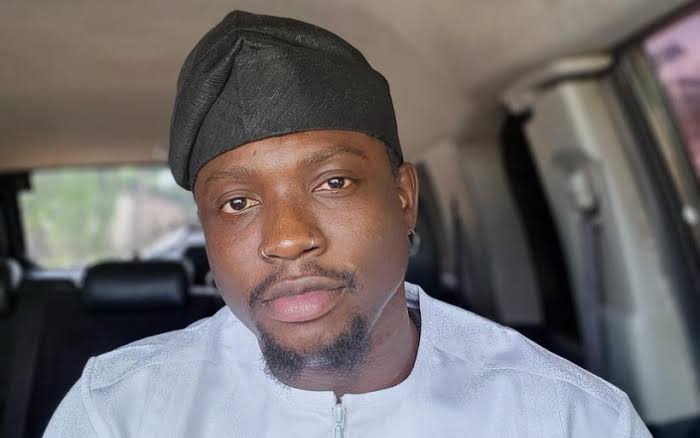
Popular Nigerian social media activist and critic Martins Vincent Otse, widely known as VeryDarkMan (VDM), has once again sparked a major debate after making strong allegations about the root causes of insecurity in Nigeria during the Nigerian Bar Association (NBA) Annual General Conference.
Speaking during the event, VeryDarkMan alleged that politics is at the centre of Nigeria’s persistent security challenges, further claiming that the government, police and military personnel benefit from the country’s prolonged insecurity.
According to him:
“The root of insecurity is politics. The government benefit from this. The police benefits. The military men benefits. Since insecurity started, Generals get higher pay.”
The comments have since generated conversations across social media, with Nigerians divided over the claims. While some agreed with VeryDarkMan’s argument that politics has played a major role in Nigeria’s security problems, others questioned the evidence behind his allegations, particularly his suggestion that security agencies and government officials benefit from the crisis.
The statement comes amid renewed national conversations about insecurity, accountability and the enormous resources Nigeria continues to spend on security.
“The Root of Insecurity Is Politics”
VeryDarkMan’s major argument was that politics is at the heart of the insecurity affecting Nigeria.
For many years, Nigeria has faced several security challenges across different parts of the country. These include terrorism, banditry, kidnapping, communal conflicts, armed attacks and other forms of violent crime.
The country has repeatedly announced new security strategies and deployed military and police personnel to troubled areas. Governments at different levels have also allocated significant resources to security operations.
However, despite these efforts, insecurity has remained one of the biggest concerns for many Nigerians.
VeryDarkMan’s comments suggest that political interests may be contributing to the continuation of the crisis. His statement appears to raise questions about whether political actors have always been fully committed to solving insecurity or whether political interests sometimes interfere with efforts to address the problem.
This is a controversial argument, but it reflects a belief held by some Nigerians who have become frustrated by the country’s inability to permanently defeat insecurity despite years of military operations and increased security spending.
For these Nigerians, the question is simple: Why has insecurity continued for so long despite the huge amount of money, personnel and resources committed to fighting it?
Allegations That Government and Security Agencies Benefit
The most controversial part of VeryDarkMan’s statement was his allegation that the government, police and military personnel benefit from insecurity.
“The government benefit from this. The police benefits. The military men benefits,” he said.
These are serious allegations, and they have the potential to generate strong reactions from the institutions mentioned.
VeryDarkMan did not, in the quoted statement, present specific evidence showing that government officials, police officers or military personnel deliberately benefit from the continuation of insecurity. However, his remarks appear to focus on the financial and political systems surrounding security challenges.
When insecurity increases, governments often spend more money on security. Additional funds may be approved for military operations, security equipment, intelligence gathering and other emergency measures.
Security personnel may also receive additional allowances or special payments when deployed to high-risk areas or involved in certain operations.
However, the existence of security budgets, allowances or increased funding does not automatically prove that security personnel or institutions want insecurity to continue.
This distinction is important.
There is a difference between saying that insecurity leads to increased security spending and alleging that individuals deliberately benefit from, or encourage, insecurity.
The second claim requires strong evidence.
This was also at the centre of the earlier disagreement between VeryDarkMan and military representatives at the NBA conference, where concerns were raised about making broad allegations against an entire institution without evidence.
The Claim About Generals and Higher Pay
VeryDarkMan also claimed that military generals receive higher pay as insecurity continues.
“Since insecurity started, Generals get higher pay,” he alleged.
The statement appears to be connected to his wider argument that increased insecurity leads to increased government spending and financial benefits within the security system.
But this allegation is also likely to attract scrutiny.
Military salaries and allowances can change due to government-approved salary reviews, promotions, inflation adjustments, rank structures, special duties and other factors. Therefore, an increase in the earnings of senior military officers does not, by itself, prove that insecurity is being sustained for financial reasons.
Nevertheless, the statement raises another important question about transparency.
How much does Nigeria spend on insecurity? How are security budgets managed? How are emergency funds monitored? How are contracts awarded? And are there enough systems in place to ensure that public money allocated for security is used effectively?
These are legitimate questions that citizens and journalists can continue to ask.
The problem, however, is that questions about public accountability are different from allegations of deliberate involvement in the continuation of insecurity.
A Nation Frustrated by Insecurity
The strong reactions to VeryDarkMan’s comments are understandable because insecurity has affected millions of Nigerians.
Families have lost loved ones to violent attacks. Communities have been displaced. Farmers have struggled to access their farmlands in some areas because of security concerns. Businesses have suffered, and many Nigerians now live with the fear of kidnapping and violent crime.
For many people, the frustration is no longer just about insecurity itself but about the feeling that the crisis has continued for far too long.
This frustration often creates room for conspiracy theories, anger and suspicion.
When citizens repeatedly hear about security spending but continue to see kidnappings, attacks and violence, they naturally begin to question the effectiveness of the system.
VeryDarkMan’s comments appear to come from this broader atmosphere of public frustration and distrust.
His supporters believe that he is simply saying what many Nigerians think but are afraid to say publicly.
However, his critics argue that serious allegations must be supported with facts, particularly when they involve institutions and individuals responsible for national security.
Freedom of Speech and the Responsibility to Provide Evidence
The controversy surrounding VeryDarkMan’s comments also raises important questions about freedom of expression.
Citizens have the right to criticise their government and question public institutions. Activists and journalists play an important role in demanding transparency and accountability.
Without criticism, powerful institutions could operate without proper scrutiny.
However, freedom of speech also comes with responsibility.
Public figures with large audiences can influence how millions of people view government agencies and institutions. This means they must be careful when presenting allegations as facts.
A person can argue that insecurity has led to increased security spending. A person can question how that money is being used. A person can demand an investigation into allegations of corruption.
But when someone alleges that government officials, police officers or military personnel benefit from insecurity, the claim becomes more serious and should ideally be supported with specific evidence.
VeryDarkMan’s statement has therefore reopened the debate about the responsibility of social media activists in Nigeria.
Should activists focus more on raising questions than making conclusions without publicly available evidence?
Or should outspoken personalities be allowed to make strong allegations as part of their role in challenging powerful institutions?
The debate continues.
Nigerians React to the Viral Statement
As the comments continue to circulate online, Nigerians have expressed different opinions.
Some social media users have agreed with VeryDarkMan, arguing that Nigeria’s insecurity has become too prolonged for citizens not to ask difficult questions about politics, security budgets and accountability.
Others have criticised his statement, saying that he unfairly grouped entire institutions together.
According to this argument, thousands of police officers and military personnel risk their lives daily in different parts of Nigeria. Some have been injured or killed while serving the country.
Critics therefore argue that it is unfair to suggest that all members of the security forces benefit from insecurity.
The difference between institutional problems and individual wrongdoing is likely to remain at the centre of this discussion.
An institution can have corruption problems without every individual working there being corrupt. Likewise, the fact that security budgets increase during periods of insecurity does not automatically mean that security personnel want the crisis to continue.
The Need for Transparency
One issue that both supporters and critics of VeryDarkMan may agree on is the need for greater transparency.
Nigerians deserve to know how security funds are spent.
Citizens deserve answers when insecurity continues despite massive public expenditure.
Government agencies must be accountable for resources allocated to them, while allegations of corruption or misconduct should be independently investigated.
Transparency can help reduce public suspicion.
When citizens have access to credible information about security spending, operations and accountability mechanisms, there is less room for speculation and unverified claims.
At the same time, those making serious allegations should be prepared to provide evidence that can be independently examined.
Conclusion
VeryDarkMan’s statement at the NBA Annual General Conference has once again placed him at the centre of a national conversation.
His allegation that “the root of insecurity is politics” reflects the growing frustration many Nigerians feel about the country’s long-running security crisis.
However, his further claims that the government, police and military personnel benefit from insecurity have generated serious controversy and raised questions about evidence and responsible public commentary.
There is no doubt that Nigerians have the right to demand answers about insecurity, security spending and the effectiveness of public institutions.
But allegations that individuals or institutions benefit from the continued suffering of citizens are substantial claims that require substantial evidence.
VeryDarkMan’s comments may have been controversial, but they have succeeded in reopening a major national discussion about insecurity, politics and accountability.
And perhaps the most important question remains this:
If Nigeria continues to spend enormous resources on security, why does insecurity remain such a major problem?
Until Nigerians receive clear and convincing answers, voices demanding accountability are unlikely to remain silent.