
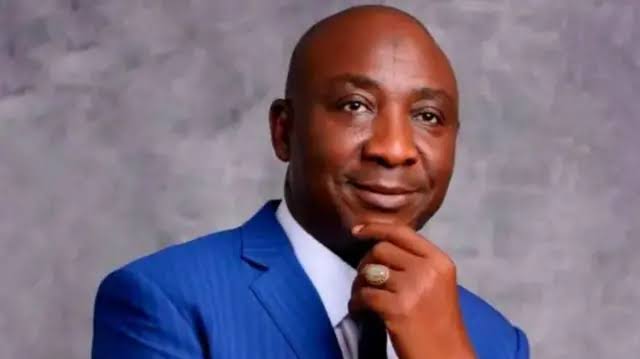
Nigerian football has entered a new chapter following the official resignation of Alhaji Ibrahim Musa Gusau as President of the Nigeria Football Federation (NFF).
Gusau announced his decision on Thursday, August 27, 2026, bringing his nearly four-year tenure at the helm of Nigerian football to an end. His resignation comes amid growing national disappointment over the recent performances of Nigeria’s national teams and increasing calls for major reforms in the administration of football in the country.
The development has sent shockwaves across Nigeria’s sporting community, with football fans, former players, administrators and stakeholders already debating what comes next for the country’s football governing body.
According to the NFF’s official statement, Gusau said his decision followed consultations with his family, friends and stakeholders within the football community. He explained that he was stepping aside in what he described as the overriding interest of Nigerian football.
End of an Era for Nigerian Football
Ibrahim Gusau was elected President of the Nigeria Football Federation in September 2022, succeeding the previous leadership at a time when Nigerian football was already facing enormous expectations.
As President of the NFF, Gusau was responsible for leading one of the most important sporting institutions in Africa. Football remains Nigeria’s biggest sport, with millions of passionate supporters following the Super Eagles, Super Falcons and various youth national teams.
However, leading Nigerian football has never been an easy task.
The position comes with enormous pressure because Nigerians expect success on the international stage. A poor performance by the Super Eagles or Super Falcons often becomes a national conversation, while victories bring millions of Nigerians together regardless of ethnic, religious or political differences.
During his tenure, Gusau’s administration faced both moments of progress and periods of serious criticism.
But recent disappointments involving Nigeria’s national teams increased pressure on the leadership of the NFF and intensified calls for changes at the top.
The NFF confirmed that Gusau’s resignation came 34 days before the scheduled end of his four-year tenure. He said the decision was intended to create room for a comprehensive and orderly reform process aimed at addressing longstanding institutional, governance and developmental challenges confronting Nigerian football.
Mounting Pressure Over National Team Performances
The resignation comes after a difficult period for Nigerian football.
One of the biggest issues that generated public anger was Nigeria’s failure to qualify for the 2026 FIFA World Cup. For a country with Nigeria’s football history, talent and international reputation, missing another major global tournament was a painful development for supporters.
The Super Eagles remain one of Africa’s most successful national teams, having produced legendary players and achieved remarkable success at continental and international competitions.
Nigeria’s football history includes memorable appearances at the FIFA World Cup, Olympic glory and Africa Cup of Nations victories. Therefore, expectations remain extremely high whenever the national team competes.
However, recent results have raised serious questions about player development, coaching, administration and long-term planning.
The situation became even more concerning following the failure of the Super Falcons to qualify for the 2027 FIFA Women’s World Cup. Reports described the development as a historic setback for the women’s national team, which had maintained a remarkable record of participation at every Women’s World Cup since 1991.
For many Nigerian football supporters, these disappointments represented more than ordinary losses. They became symbols of deeper problems within the country’s football system.
Gusau Says He Resigned After Consultations
Speaking about his decision, Gusau explained that he had consulted with people close to him before making the announcement.
He also reportedly encouraged members of the NFF Executive Committee who wished to step aside to consider doing so, although reports initially differed over the number of officials who had resigned.
The NFF later confirmed that General Secretary Dr Mohammed Sanusi and members of the Executive Committee were also part of the wider leadership shake-up.
This means the resignation is not simply about one individual leaving office. It could represent one of the most significant transitions in the recent history of Nigerian football administration.
For years, football stakeholders have called for greater reforms within the NFF. Issues surrounding governance, transparency, funding, grassroots development and the management of national teams have remained subjects of intense debate.
The latest development could therefore create an opportunity for Nigerian football to take a fresh look at its future.
A Difficult Job With Enormous Expectations
It is important to recognise that being NFF President is one of the most difficult jobs in Nigerian sports.
The person occupying the position must manage relationships with FIFA, CAF, the Federal Government, the National Sports Commission, state football associations, club owners, coaches, players and millions of passionate football supporters.
Every major decision is closely watched.
When the Super Eagles win, the NFF leadership receives praise. When the team loses, administrators often face immediate criticism.
The same applies to the Super Falcons and other national teams.
During Gusau’s administration, the NFF also continued programmes connected with coaching education and football development. Earlier in 2026, the federation highlighted efforts to improve coaching pathways and restore Nigeria’s position within CAF coaching education programmes.
However, supporters often judge football administrators primarily by results on the pitch.
And in football, recent disappointments can quickly overshadow other achievements.
That reality appears to have contributed significantly to the pressure that eventually surrounded the Gusau administration.
What Happens Next for the NFF?
The biggest question now is: what happens next?
The NFF was already preparing for its elective congress, with the federation previously announcing plans for the 2026 Elective Congress in Lafia, Nasarawa State.
With Gusau and other officials stepping aside, stakeholders will now be watching closely to see how the transition process unfolds.
Nigerian football needs stability, but it also needs serious reform.
Many football lovers believe the next generation of NFF leaders must focus more strongly on long-term development rather than waiting until major competitions approach before making important decisions.
Nigeria has one of the largest pools of football talent in Africa.
Across the country, young boys and girls play football every day on school fields, streets and local pitches. The challenge has always been creating a strong system capable of discovering, developing and properly supporting that talent.
Grassroots football must receive greater attention.
The domestic leagues also need stronger commercial structures and improved facilities. Coaches need better development opportunities, while refereeing, youth competitions and women’s football require consistent investment.
Most importantly, Nigerian football needs an administration that can build trust among players, fans and stakeholders.
Opportunity for a Fresh Start
For some Nigerians, Gusau’s resignation represents the end of a disappointing era.
For others, it is an opportunity to reflect on the bigger problems facing Nigerian football.
Changing one president alone will not automatically solve every problem.
The next NFF leadership will inherit many of the same challenges that previous administrations faced. These include funding issues, disagreements between stakeholders, pressure from supporters and the enormous expectations attached to Nigeria’s national teams.
But leadership change can create an opportunity for new ideas.
The incoming administration will need to convince Nigerians that football governance can become more transparent, professional and focused on sustainable development.
Nigerians will also expect the next leadership to rebuild confidence in the Super Eagles and Super Falcons.
The immediate priority will be ensuring that the country’s national teams return to winning ways.
Nigerians React to a Major Football Moment
As news of Gusau’s resignation spreads, reactions are expected to continue pouring in from across the country.
Football is emotional in Nigeria.
A major development involving the NFF is not simply a sports story. It is a national conversation.
From Lagos to Kano, Abuja to Port Harcourt, Ibadan to Enugu, millions of Nigerians will have opinions about whether the resignation was necessary and what should happen next.
Former footballers and sports administrators are also likely to play important roles in the coming debate about the future direction of Nigerian football.
The central question will be whether the country can finally build a football system capable of matching the enormous talent available.
Nigeria has produced world-class players who have represented some of the biggest clubs across Europe and other parts of the world.
The country has the talent.
The challenge is building the structure.
Conclusion: The Beginning of Another Chapter
The resignation of Alhaji Ibrahim Musa Gusau as President of the Nigeria Football Federation marks a major moment in the history of Nigerian football.
His departure ends a tenure that began with hope and expectations but concluded amid intense pressure and disappointing results for some of Nigeria’s most important national teams.
Gusau said his decision was taken after careful consideration and in the interest of Nigerian football, with the NFF describing the move as part of a broader need for reform and renewal.
But the resignation itself is only the beginning.
The real question is what Nigerian football does next.
Will the leadership transition bring genuine reform?
Will grassroots football receive the attention it deserves?
Will Nigeria build stronger domestic leagues and youth development structures?
Will the Super Eagles and Super Falcons return to their positions among the strongest teams in world football?
These are the questions that the next generation of football leaders must answer.
For now, one thing is certain.
Ibrahim Gusau’s era as NFF President is officially over.
And as Nigerian football prepares for another major transition, millions of fans will be hoping that the end of one era becomes the beginning of a better, stronger and more successful future for the beautiful game in Nigeria.