
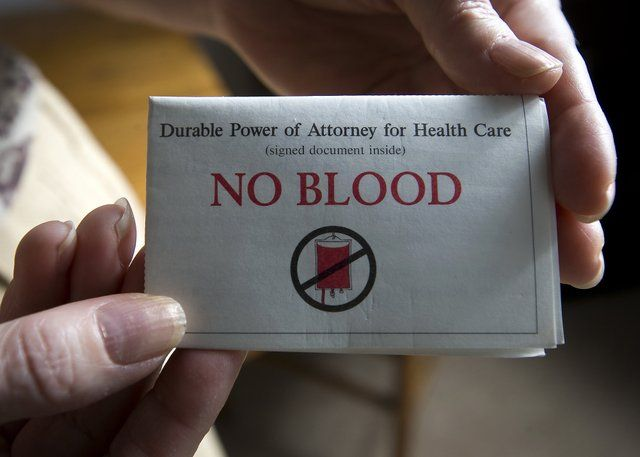
The religious organisation has introduced a significant change to its medical guidance, allowing members to make personal decisions about red blood cells, white blood cells, plasma and platelets while maintaining its prohibition on whole-blood transfusions.
Jehovah’s Witnesses have revised their long-standing religious position on blood transfusions, allowing individual members to decide whether to accept or donate the four primary components of human blood for medical treatment.
The announcement was made on Friday, September 18, 2026, by the organisation’s Governing Body, marking a significant change in a policy that has influenced medical decisions among Jehovah’s Witnesses for decades.
Under the revised guidance, members may now decide according to their personal conscience whether to receive red blood cells, white blood cells, plasma or platelets obtained from another person’s donated blood.
The organisation also permits members to make individual decisions about donating blood specifically for processing into components or smaller fractions that can be used to treat other patients.
However, Jehovah’s Witnesses have maintained their religious prohibition on transfusions of whole blood.
The distinction is central to understanding the announcement: while members now have greater freedom concerning individual blood components, the organisation’s position against receiving whole blood remains unchanged.
The change was confirmed in an official statement published by Jehovah’s Witnesses.
What Has Changed in the Jehovah’s Witnesses Blood Policy?
Before the September 2026 announcement, Jehovah’s Witnesses were generally required under their religious teachings to refuse transfusions involving whole blood and its four main components.
These components are red blood cells, white blood cells, plasma and platelets.
Certain smaller substances derived from blood, commonly described as blood fractions, were already matters of personal conscience.
The new guidance extends individual decision-making to the four major components themselves.
This means a Jehovah’s Witness who requires a red blood cell transfusion, for example, may now personally decide whether to accept the treatment.
The same applies to plasma, platelets and white blood cells.
Importantly, the revision does not require members to accept these treatments. Those who believe receiving blood components conflicts with their religious conscience remain free to refuse them.
The organisation has presented the change as an adjustment to how its biblical principles are applied to medical products derived from blood.
Why Jehovah’s Witnesses Have Traditionally Refused Blood Transfusions
Jehovah’s Witnesses base their religious position on blood primarily on biblical instructions concerning its sacredness.
One passage frequently cited is Acts 15:28-29, which instructs Christians to abstain from blood.
The organisation interprets this instruction as applying not only to consuming blood but also to certain medical uses.
For decades, this interpretation led Jehovah’s Witness patients to reject treatments involving transfusions of whole blood and its primary components.
The position became particularly significant in situations involving emergency surgery, severe blood loss and illnesses requiring blood-related treatment.
Medical professionals have consequently developed approaches to managing some patients without donor blood transfusions.
These approaches can include techniques to minimise blood loss, treat anaemia and improve a patient’s own blood production.
However, the effectiveness and suitability of such methods depend on the patient’s medical condition.
The September revision changes the religious guidance concerning blood components without abandoning the organisation’s broader belief that blood is sacred.
Whole-Blood Transfusions Are Still Not Accepted
Although the revised policy expands personal choice, the distinction between whole blood and separated blood components remains important.
Whole blood contains red cells, white cells, platelets and plasma together.
In medical practice, donated blood is often processed into separate components so that patients can receive the specific products required for their conditions.
Under the revised Jehovah’s Witnesses guidance, members may decide whether to receive these separated components.
However, the organisation continues to prohibit transfusions of whole blood.
It also maintains its position against donating blood specifically for use as a whole-blood transfusion.
Members may instead decide whether to donate blood for the clearly identified purpose of producing components or fractions for medical treatment.
For hospitals, this means that a patient’s religious identity alone should not be treated as sufficient information about which blood products the person will accept.
Individual preferences must be established through direct communication and appropriate medical consent procedures.
Second Major Blood-Policy Adjustment in 2026
The September announcement follows an earlier revision introduced in March 2026.
That adjustment concerned the use of a patient’s own blood during medical or surgical treatment.
Previously, Jehovah’s Witnesses generally rejected procedures involving the collection and storage of their own blood for later transfusion.
The March revision made certain decisions involving the collection, storage and later use of a patient’s own blood matters of individual conscience.
Such procedures are commonly described as autologous blood management or autologous transfusion, depending on the specific medical technique involved.
The September announcement extends personal choice to the four main components obtained from another person’s blood.
Together, the revisions represent a substantial change in the range of medical treatments that individual Jehovah’s Witnesses may consider acceptable under their religious guidance.
The developments also mean that medical documents completed before the policy changes may not accurately reflect every member’s present treatment preferences.
What the Four Blood Components Do in Medical Treatment
Understanding the significance of the announcement requires distinguishing the functions of the four blood components.
Red blood cells transport oxygen from the lungs to tissues throughout the body. Red blood cell transfusions may be necessary for patients experiencing serious blood loss or certain forms of severe anaemia.
White blood cells form part of the immune system and help defend the body against infections. Transfusions involving certain white blood cells are uncommon but may be considered in specific clinical circumstances.
Plasma is the liquid portion of blood. It contains proteins, including substances involved in blood clotting, and may be used in selected bleeding disorders and other medical conditions.
Platelets help control bleeding by contributing to the formation of blood clots. Platelet transfusions may be required for patients with dangerously low platelet counts or impaired platelet function.
The components are not interchangeable. A patient who needs red blood cells cannot necessarily receive plasma or platelets as a substitute.
Treatment decisions therefore depend on the patient’s diagnosis, clinical condition and the benefits and risks of the available options.
For Jehovah’s Witness patients, the revised religious guidance may allow greater consideration of treatments that were previously regarded as unacceptable.
What the Change Means for Doctors and Hospitals
The revised policy has practical implications for healthcare professionals who treat Jehovah’s Witness patients.
Historically, doctors frequently associated the religious group with refusal of whole blood and its major components.
The September announcement means that healthcare workers should avoid assuming that all Jehovah’s Witness patients have identical preferences.
One patient may agree to receive red blood cells but decline plasma. Another may accept platelets while refusing other components.
Some may continue to reject all transfused blood products.
The appropriate approach is to discuss the proposed treatment with the patient, explain its medical purpose and establish which options the individual is willing to accept.
This is particularly important before planned surgical procedures, where medical teams may need to prepare for potential blood loss.
In emergencies, clinicians must follow applicable laws, professional standards and valid patient directives.
The revised religious policy does not replace the need for informed consent or appropriate medical judgement.
It also does not mean that every blood-related treatment is suitable for every patient.
Why Existing Medical Directives May Need Reviewing
Many Jehovah’s Witnesses use advance healthcare directives to record their decisions about blood transfusions and related medical procedures.
These documents can help doctors understand a patient’s wishes when the patient is unable to communicate.
However, a directive prepared before the March or September 2026 revisions may reflect restrictions that the individual no longer personally wishes to follow.
For example, a patient who previously refused all four primary blood components may now decide that one or more are acceptable.
If that person’s medical records have not been updated, healthcare professionals may rely on instructions that no longer reflect the patient’s current preferences.
Patients who wish to reconsider their choices can discuss the available treatments with qualified healthcare professionals and update their directives in accordance with applicable legal requirements.
Clear communication with healthcare representatives and family members can also help reduce uncertainty during medical emergencies.
Different Perspectives on the Policy Revision
The announcement has attracted attention because Jehovah’s Witnesses’ position on blood transfusions has long been a subject of medical, religious and ethical discussion.
Supporters of greater individual choice may view the revision as an opportunity for members to consider additional treatments without departing from the organisation’s current guidance.
Some former members and critics have questioned why the distinction between whole blood and its major components should remain central to the policy.
Others have raised concerns about the implications of earlier restrictions for patients who faced difficult treatment decisions.
These perspectives reflect broader questions about religious freedom, medical autonomy and the relationship between personal belief and healthcare.
Jehovah’s Witnesses maintain that their religious position is based on their interpretation of biblical teachings and that members should make conscientious decisions within the revised guidance.
The change does not remove every disagreement surrounding the organisation’s blood policy, but it alters the options available to individual members.
What the New Policy Means for Jehovah’s Witnesses in Nigeria
The revised guidance also applies to Jehovah’s Witnesses in Nigeria, where religious beliefs can influence decisions about medical treatment.
For Nigerian hospitals, the announcement reinforces the importance of discussing blood-related procedures directly with patients rather than making assumptions based on religious affiliation.
Patients undergoing surgery or treatment for severe anaemia, bleeding disorders or other serious conditions may now have additional options to consider.
However, the practical impact will depend on each patient’s personal decision, the availability of appropriate blood components and the clinical circumstances.
Nigeria’s healthcare facilities also differ in their capacity to provide specialised blood products and advanced transfusion services.
As a result, the policy revision should not be interpreted as an automatic solution to every medical challenge involving Jehovah’s Witness patients.
Its immediate significance lies in expanding the range of choices that members may personally consider.
A Significant Change With Continuing Religious Limits
The September 18, 2026, announcement represents an important development in the medical guidance followed by Jehovah’s Witnesses worldwide.
For the first time under the organisation’s revised policy, the decision to accept the four major components of another person’s blood is explicitly left to individual conscience.
The same principle now applies to donating blood for the purpose of producing components or fractions for medical treatment.
Nevertheless, the organisation continues to reject transfusions of whole blood.
The long-term impact of the revision will depend partly on how members interpret their new choices, how healthcare professionals communicate treatment options and whether patients update their medical instructions.
For now, the central development is clear: Jehovah’s Witnesses have expanded individual decision-making concerning blood components while maintaining their religious position against whole-blood transfusions.
Sources and further reading
- Jehovah’s Witnesses — Official Announcement, September 18, 2026: Each Witness Now Decides Whether to Accept or Donate Main Blood Components
- Jehovah’s Witnesses — Governing Body Update: 2026 Governing Body Update #6
- Jehovah’s Witnesses — Medical Information for Clinicians: Official Medical Library
- Premium Times Nigeria — September 19, 2026: [Blood Transfusion: Jehovah’s Witnesses Ease Restrictions After Eight Decades](https://www.premiumtimesng.com/entertainment/naija-fashion/910876-blood-transfusion-jehovahs-witnesses-ease-restrictions-after-eight-dec