
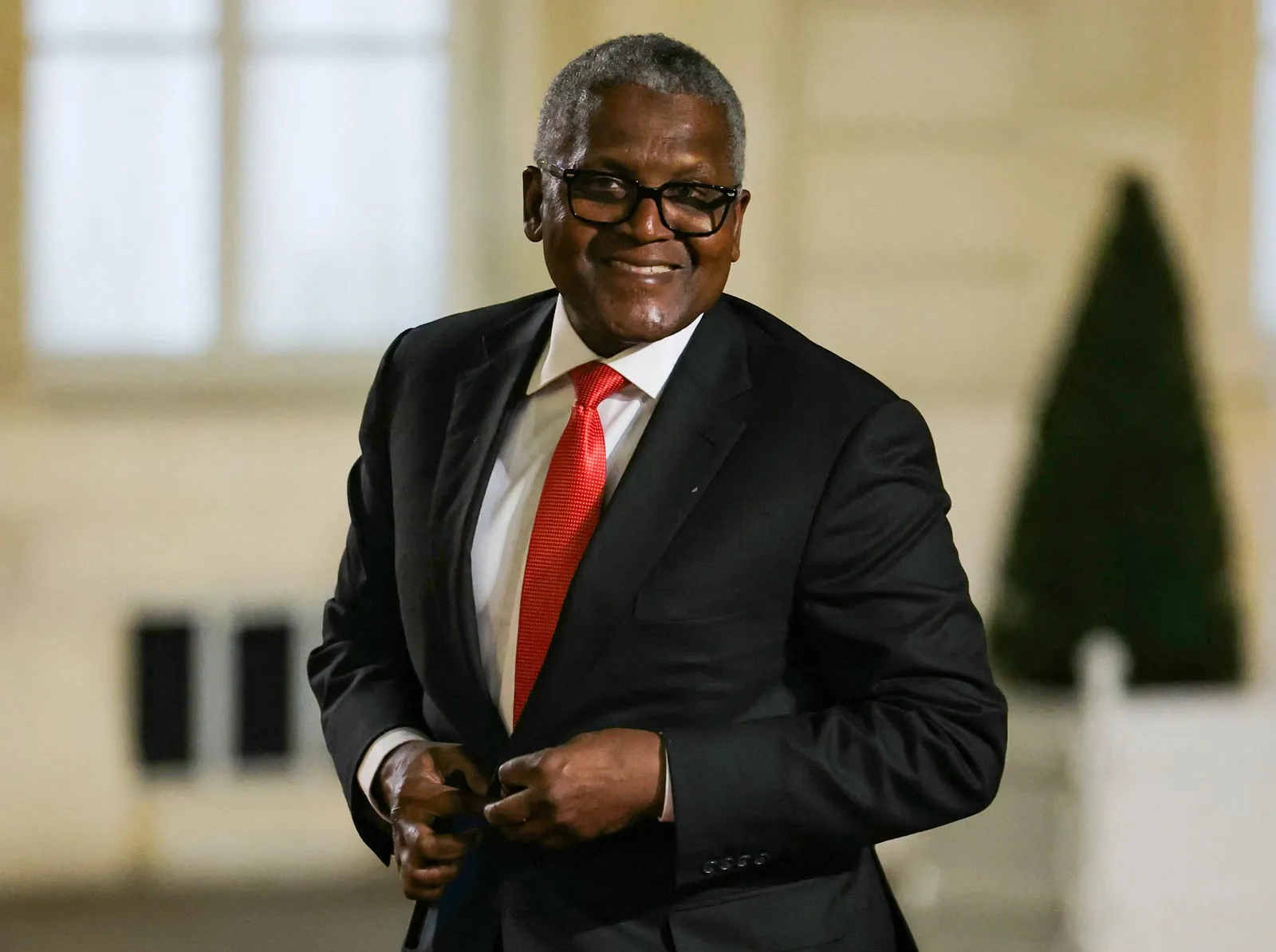
The Nigerian industrialist is considering redirecting funds from proposed steel projects into electricity infrastructure, raising questions about how private investment could help close Africa’s energy access gap.
Nigerian billionaire and Dangote Group President Aliko Dangote has announced plans to invest more than $10 billion in Africa’s power sector, signalling a potential expansion of his business interests into one of the continent’s most critical infrastructure industries.
Dangote disclosed the plan during an interview with Al Jazeera on September 21, 2026, explaining that the group could abandon some proposed business ventures, including steel, to prioritise electricity investment.
The announcement comes as African countries continue to face major challenges in expanding electricity access, improving grid reliability and attracting long-term infrastructure financing.
Although Dangote outlined an investment ambition exceeding $10 billion, specific project locations, generation capacities, financing arrangements and construction schedules have not been publicly detailed.
The distinction is important: the announcement represents a proposed investment strategy rather than confirmation that the entire amount has already been committed to operational projects.
Why Dangote Is Prioritising Electricity Over Steel
One of the most significant aspects of Dangote’s announcement is the possibility that his conglomerate could redirect capital previously intended for steel production into power infrastructure.
During the interview, Dangote said the group was considering cancelling one or two planned businesses, with steel among the possibilities.
His comments suggest that electricity could become a more immediate priority in the group’s wider industrial expansion strategy.
Power availability directly affects manufacturing costs, production capacity and the competitiveness of locally manufactured goods. Industries such as cement, steel, fertiliser and petroleum refining require substantial and consistent electricity supplies.
For companies operating in countries with unreliable public power networks, maintaining independent generation facilities can significantly increase operating expenses.
The proposed shift therefore raises an important economic question: could investment in electricity infrastructure create broader industrial benefits than expanding into another energy-intensive manufacturing sector?
Improved power infrastructure could benefit multiple industries simultaneously. However, the eventual economic impact would depend on the projects selected, their operating models and whether the electricity produced reaches customers beyond Dangote Group’s own businesses.
Africa’s Electricity Problem Remains a Major Development Challenge
Africa’s electricity deficit remains one of the largest barriers to economic development.
According to the International Energy Agency’s 2025 report, Financing Electricity Access in Africa, approximately 600 million people across the continent lacked access to electricity.
The report also estimated that achieving universal electricity access would require approximately $150 billion in investment over a decade, equivalent to around $15 billion annually.
These figures illustrate the scale of the challenge facing governments, electricity providers and private investors.
Electricity access affects far more than household lighting. It determines whether hospitals can operate essential medical equipment, schools can use digital learning resources and small businesses can maintain productive operations.
In rural agricultural communities, reliable electricity can support irrigation, refrigerated storage and food processing. Without these facilities, farmers may struggle to preserve perishable produce or increase the value of their harvests.
For urban businesses, unreliable electricity can mean additional expenditure on generators, fuel and equipment maintenance.
However, connecting households to electricity is only part of the challenge. Power must also remain reliable and affordable enough for consumers to use.
That is why new investment must address not only the amount of electricity generated but also the infrastructure and commercial systems required to deliver it.
What Could $10 Billion Achieve in Africa’s Power Sector?
An investment exceeding $10 billion could support a substantial portfolio of electricity projects, depending on the technologies selected and the countries involved.
Potential investment areas include electricity generation, transmission infrastructure, distribution networks and decentralised energy systems.
Large-scale generation projects could increase available electricity supply, particularly in industrial areas where demand is concentrated.
Transmission investment could help move electricity from generating facilities to population centres and industrial customers.
Distribution improvements could reduce technical losses, support more reliable service and help electricity providers connect additional households and businesses.
Decentralised technologies, including solar mini-grids and standalone electricity systems, could also serve communities where extending the national grid is technically difficult or economically expensive.
Nevertheless, it would be premature to assume that Dangote’s proposed investment will include all these areas.
The group has not publicly provided a detailed breakdown of the technologies, infrastructure categories or countries that would receive funding.
The effectiveness of the investment will ultimately depend on how the capital is allocated and whether the selected projects address existing gaps in electricity supply.
What the Announcement Could Mean for Nigeria
Nigeria could be an important market to watch as Dangote Group develops its electricity investment strategy, although the company has not confirmed how much of the proposed funding would be directed to the country.
Nigeria’s electricity sector faces interconnected challenges involving generation capacity, transmission limitations, distribution infrastructure and the financial sustainability of electricity providers.
These difficulties affect households and businesses differently.
Manufacturers often require dependable electricity to operate machinery continuously, while small enterprises may depend on alternative power sources when public supply is interrupted.
An increase in privately financed electricity infrastructure could potentially support industrial activity and reduce dependence on self-generation.
However, additional generation capacity would not automatically guarantee better electricity supply for households.
For consumers to benefit, projects must be connected to functioning transmission and distribution systems, or operate through alternative arrangements capable of delivering electricity directly to users.
Investment structures, tariff arrangements, regulatory approvals and customer affordability will therefore be central to assessing the practical benefits of any projects announced.
Nigeria’s electricity reforms have also created opportunities for greater participation by state governments and private investors, making the regulatory environment an important factor in future investment decisions.
Dangote Group Already Has Experience in Power Generation
The proposed investment would not represent Dangote Group’s first involvement in electricity generation.
The conglomerate has developed power-generation infrastructure to support its industrial operations, including cement production and petroleum refining.
According to Nairametrics, Dangote Group’s manufacturing businesses have access to substantial self-generated electricity capacity, while the Dangote Refinery operates its own power facility.
This experience could provide an operational foundation for future investments in electricity infrastructure.
However, producing electricity for industrial facilities is different from supplying a national or regional electricity market.
Commercial electricity projects may require additional transmission arrangements, customer agreements, regulatory licences and long-term financing structures.
The group’s experience in industrial power generation could be relevant, but the business model for any new investment remains to be clarified.
Why Funding Alone Will Not Solve the Electricity Crisis
The proposed investment is substantial, but Africa’s electricity challenges cannot be resolved through capital expenditure alone.
Several conditions influence whether power projects deliver lasting benefits.
Infrastructure coordination: New generation facilities must be supported by transmission and distribution capacity. Otherwise, additional electricity may not reach the intended customers.
Financial sustainability: Electricity providers need reliable revenue collection and commercially viable operating arrangements to maintain infrastructure and attract further investment.
Regulatory stability: Investors require clear rules governing licences, tariffs, electricity sales and contractual obligations.
Consumer affordability: Electricity access will remain limited if connection charges and tariffs exceed what households and small businesses can reasonably pay.
Technical maintenance: Long-term performance depends on skilled workers, equipment maintenance, network management and operational accountability.
These factors explain why electricity investment must be evaluated not only by the amount announced but also by the measurable service improvements delivered.
Could Renewable Energy Be Part of the Investment?
Africa has significant opportunities to expand electricity access through renewable technologies, particularly solar power.
Solar mini-grids and standalone systems can be useful in communities located far from existing electricity networks.
Large renewable-energy installations may also contribute to electricity supply when supported by appropriate grid infrastructure, storage systems and operating arrangements.
However, Dangote has not publicly specified whether the proposed $10 billion investment would prioritise renewable energy, gas-fired generation or a combination of technologies.
The eventual energy mix will be important because different technologies have different construction costs, operational requirements and environmental implications.
A project intended to supply a large industrial facility may require a different technical solution from one designed to connect remote rural households.
The appropriate approach will depend on local electricity demand, infrastructure availability, affordability and long-term operating costs.
What Investors and Electricity Consumers Should Watch Next
Dangote’s announcement has introduced the possibility of a major private-sector investment programme in African electricity infrastructure.
However, several important questions remain unanswered.
The first is where the investment will take place. The choice of countries will determine which regulatory frameworks, infrastructure challenges and electricity markets the group must navigate.
The second is how the projects will be financed. It remains unclear how much funding would come directly from Dangote Group and whether external investors, lenders or development finance institutions would participate.
Another question concerns the type of customers the projects will serve. Electricity developed primarily for industrial users may produce different social and economic outcomes from projects designed to expand household access.
Finally, the public will need to see measurable implementation milestones, including project approvals, construction starts, installed capacity and operational performance.
These details will provide a clearer basis for evaluating the scale and potential impact of the initiative.
The Bigger Picture: Turning Investment Ambition Into Reliable Electricity
Dangote’s proposed investment highlights the growing importance of private capital in addressing Africa’s infrastructure needs.
It also reinforces the relationship between reliable electricity and industrial development.
For manufacturers, dependable power can support production efficiency. For entrepreneurs, it can reduce operational uncertainty. For households, it can improve access to services and economic opportunities.
Yet the proposed $10 billion commitment remains at an early stage, with critical implementation details still outstanding.
The ultimate measure of success will not be the size of the announced investment, but the electricity infrastructure actually delivered, its reliability and the number of people and businesses that benefit.
For Africa’s energy future, the central challenge is turning large financial commitments into affordable, dependable and sustainable electricity.
Sources and further reading
- The Guardian Nigeria — Dangote shifts to power, commits $10bn investment in three years (September 22, 2026)
- Nairametrics — Dangote targets $10 billion power investment, considers cancelling steel business (September 22, 2026)
- TheCable — Aliko Dangote plans over $10bn investment to improve power supply in Africa (September 21, 2026)
- International Energy Agency — Financing Electricity Access in Africa (2025)