
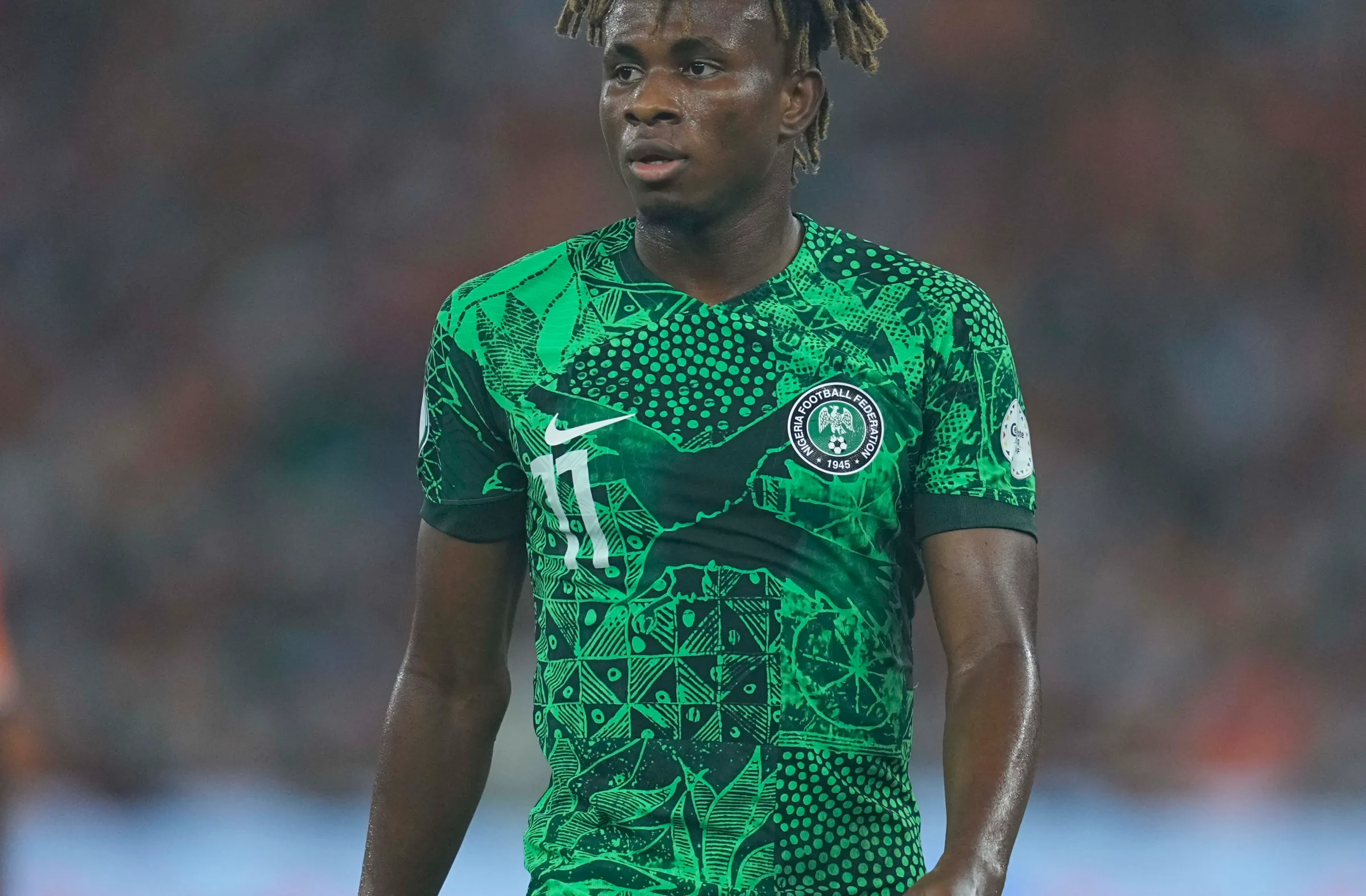
The Nigerian winger’s dribbling and decision-making attracted mixed reactions during a difficult encounter in Uyo, before debutant Moses Usor scored the winning goal.
By HillsNews Sports Desk
Super Eagles winger Samuel Chukwueze became a subject of debate among Nigerian football supporters during the national team’s 2–1 comeback victory over Madagascar in their opening 2027 Africa Cup of Nations qualifier on Friday, September 25, 2026.
The match, played at the Godswill Akpabio International Stadium in Uyo, saw Nigeria recover from an early deficit through goals from debutants George Ilenikhena and Moses Usor.
However, while the Super Eagles eventually secured all three points, Chukwueze’s performance on the right wing generated contrasting opinions among supporters following the game on X.
Some criticised his tendency to hold on to possession and his finishing, while others praised his ability to beat defenders and create attacking opportunities.
The reactions highlighted an ongoing debate about the winger’s effectiveness in the final third.
Fans Question Chukwueze’s Decision-Making
Chukwueze is known for his pace, close control and willingness to take on defenders.
Those qualities were visible during Nigeria’s encounter with Madagascar, but some supporters were frustrated by what they considered a lack of end product.
One X user complained that the winger would repeatedly attempt to dribble opponents only to lose possession.
Another questioned why his shooting had not improved and compared his attacking output with that of England international Bukayo Saka.
The comparison reflected the supporter’s expectations rather than an objective assessment of the two players.
For critics, the central concern was that Chukwueze’s individual skill did not consistently translate into goals or decisive passes.
A successful dribble can create space, but supporters also expect attacking players to recognise when to release the ball, deliver a cross or attempt a shot.
Those decisions often determine whether a promising attacking move produces a scoring opportunity.
Other Supporters Defend the Winger
Not every reaction to Chukwueze’s performance was negative.
One supporter argued that the winger had been effective on the right flank apart from his shooting, claiming that he created two chances during the match.
That assessment offered a different perspective on his contribution.
Wingers are not judged solely by goals. Their responsibilities can also include stretching the opposition’s defence, drawing defenders away from teammates and creating opportunities through crosses or passes.
Chukwueze’s willingness to run directly at opponents can help Nigeria advance into dangerous attacking positions.
However, the claim that he created two chances came from a supporter and should not be treated as an official match statistic without independent confirmation.
The contrasting reactions demonstrate how the same performance can produce different interpretations.
Madagascar’s Early Goal Increases Pressure
Nigeria’s attacking difficulties became more noticeable after Madagascar took the lead in the 16th minute.
The early setback forced the Super Eagles to chase the match and placed greater pressure on their attacking players to deliver a response.
With Madagascar protecting their advantage, Nigeria needed creativity and composure to break through the visitors’ defensive organisation.
Chukwueze attempted to provide attacking movement from the right, while Alex Iwobi worked to create opportunities through midfield.
The longer Nigeria remained behind, the greater the frustration among supporters following the game.
Some also criticised midfielder Wilfred Ndidi over a particular passage of play, although the social media comment alone does not establish precisely what happened during that incident.
Such reactions reflected the tension of the match rather than a complete assessment of individual performances.
Ilenikhena Brings Nigeria Back Into the Game
Nigeria eventually equalised in first-half stoppage time through George Ilenikhena.
The young forward, making his senior international debut, converted an opportunity created by Iwobi to bring the Super Eagles level at 1–1.
The goal changed the direction of the contest.
Instead of entering the interval behind, Nigeria had restored parity and gained an opportunity to regroup.
Ilenikhena’s contribution was particularly significant because he was making his first appearance for the senior national team.
His equaliser also highlighted the importance of effective finishing in a match where Nigeria had struggled to turn possession into goals.
Moses Usor Replaces Chukwueze and Scores Winner
The decisive moment arrived in the second half after head coach Eric Chelle introduced Moses Usor.
Usor came on for Chukwueze as Nigeria searched for a second goal.
In the 65th minute, the debutant produced a brilliant individual effort to put the Super Eagles ahead.
He carried the ball forward, moved past defenders, cut inside and finished with his left foot to complete Nigeria’s comeback.
The goal eventually secured a 2–1 victory.
Usor’s contribution gave Nigeria the breakthrough they needed and immediately attracted attention because of the circumstances.
He had entered a closely contested international qualifier and delivered the winning goal on his debut.
His performance also provided another attacking option for Chelle as the qualifying campaign progressed.
However, the fact that Usor scored after replacing Chukwueze does not automatically establish that the latter had performed poorly throughout the match.
Their contributions must be assessed within the different circumstances and minutes they played.
What Chukwueze Must Improve
The debate surrounding Chukwueze centres on the relationship between individual ability and attacking productivity.
His dribbling remains one of his most recognisable qualities.
When used effectively, it can create numerical advantages and force defenders into difficult positions.
However, the final decision is equally important.
A winger must know when to continue running, when to pass and when a shooting opportunity is worth taking.
For Nigeria, improving these decisions could help the team make better use of its attacking possession.
Chukwueze’s performances should therefore be evaluated through a combination of factors, including chance creation, ball retention, defensive contribution and effectiveness in the final third.
One match or a handful of social media comments cannot provide a complete picture of his abilities.
Super Eagles Show Resilience Despite Difficult Start
Although Chukwueze’s performance generated debate, Nigeria’s recovery was the most important outcome of the encounter.
The Super Eagles conceded early but responded through two players making their senior international debuts.
Ilenikhena’s equaliser and Usor’s winning goal demonstrated the value of having different attacking options available.
The result also gave Nigeria a positive start to their Group L campaign.
Nevertheless, Chelle will have areas to address, particularly the team’s defensive concentration and its ability to create clear chances against organised opponents.
Nigeria’s next scheduled qualifier was against Guinea-Bissau on September 29, 2026.
The Madagascar match offered both encouragement and lessons as the team continued its campaign.
Conclusion
Samuel Chukwueze’s performance against Madagascar produced contrasting reactions among Super Eagles supporters.
Some criticised his finishing and decision-making, while others recognised his ability to create attacking opportunities.
The debate became more noticeable after Moses Usor replaced him and scored the winning goal in Nigeria’s 2–1 victory.
However, the result should not reduce the assessment of Chukwueze’s contribution to a simple comparison with his replacement.
For Nigeria, the broader challenge is ensuring that attacking creativity consistently leads to goals.
Chukwueze’s ability to beat defenders remains valuable, but improving his final pass and shooting decisions could make him an even more effective player for the Super Eagles.