
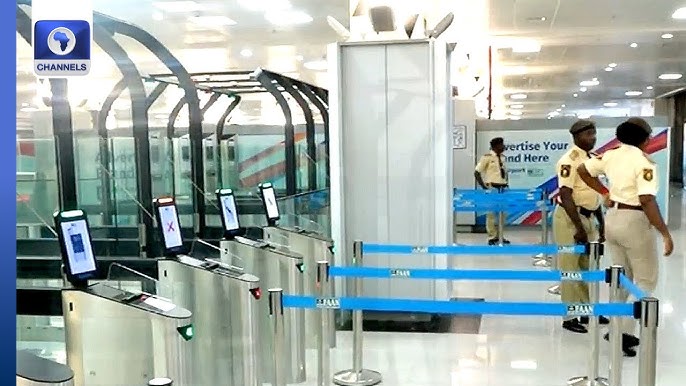
Electronic gates at major Nigerian airports are becoming an important part of the country’s evolving approach to border management. As international travel continues to grow and security challenges become more complex, Nigeria is increasingly embracing smart technology to improve the way passengers are processed at its entry and exit points.
For many years, airport immigration procedures have largely depended on manual checks by immigration officers. While human oversight remains essential, manual processing can sometimes lead to long queues, slower passenger movement and increased pressure on immigration personnel. The introduction of electronic gates, commonly known as e-gates, represents a major step towards a faster, more efficient and technology-driven immigration system.
Electronic gates use digital identity verification technologies to confirm the identity of eligible travellers. Depending on the system, this may involve scanning a passport, verifying biometric information and matching the traveller’s details with relevant immigration and security databases. Once the required checks are completed successfully, the gate can allow the passenger to proceed without going through the traditional manual process for every stage of clearance.
One of the biggest advantages of e-gates is faster passenger processing. At busy airports, long immigration queues can create frustration for travellers, especially during peak travel periods. Automated border control systems can help reduce waiting times and improve the overall airport experience. This is particularly important as Nigeria works to strengthen the competitiveness and efficiency of its major international airports.
Beyond convenience, electronic gates can also contribute to stronger border security. Modern border management is no longer only about checking a travel document visually. It increasingly depends on the ability to verify identities, detect irregularities and connect immigration processes with secure digital information systems. With the right infrastructure and safeguards, e-gates can support more accurate identity checks while allowing immigration officers to focus greater attention on cases that require human intervention.
The move towards smarter border management also reflects a broader global trend. Countries around the world are investing in biometrics, digital passports, automated clearance systems and data-driven security tools. For Nigeria, adopting similar technologies can help position its immigration system for the future while supporting the country’s growing role in international business, tourism and regional travel.
However, technology alone is not enough. The success of electronic gates will depend on reliable infrastructure, strong cybersecurity, proper maintenance and continuous training for immigration personnel. Authorities must also ensure that travellers’ personal and biometric data are protected in line with appropriate privacy and security standards.
Electronic gates are therefore more than just automated doors at the airport. They represent a shift towards a smarter model of border management—one that combines speed, security and innovation. As Nigeria continues to modernise its airports and immigration processes, digital technologies could play an increasingly important role in creating safer borders and a smoother travel experience for millions of passengers.