
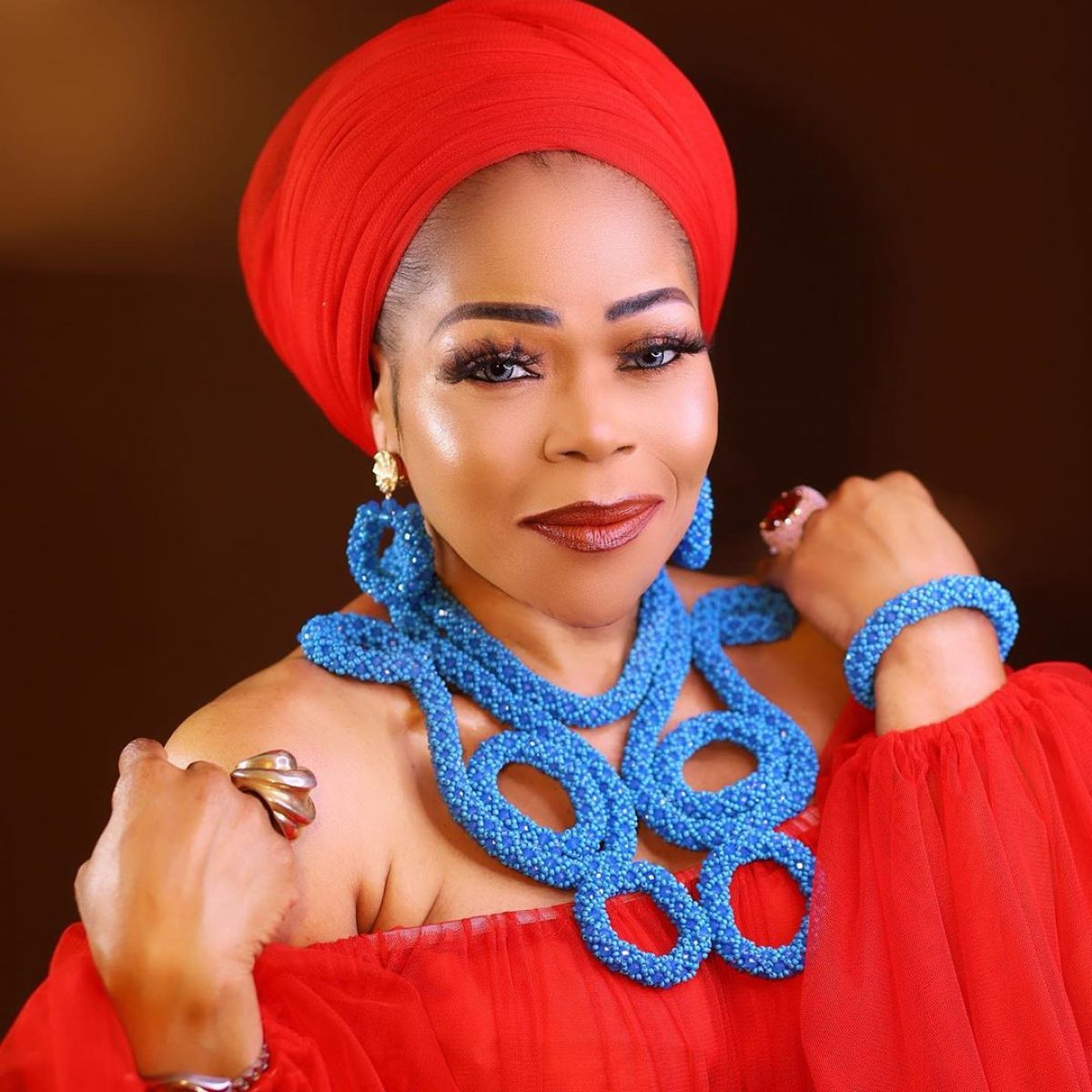
A recent statement attributed to veteran actress Shaffy Bello has generated conversations about respect, African culture, age and the changing relationship between younger and older generations.
The statement is direct and unapologetic:
“When a child calls me by my name, I pull them closer and tell them, ‘You haven’t earned the right, and you never will.’ Even children in the U.S. call me ‘Ma’am’. This is Africa after all.”
Whether people agree with the strength of the statement or not, the conversation behind it is one that many Africans can easily relate to.
In many African societies, particularly in Nigeria, the way a younger person addresses an older person is not seen as a small matter. Calling an elder simply by their first name can be interpreted as disrespectful, regardless of whether the younger person intended any disrespect.
This is why titles such as Sir, Ma, Ma’am, Uncle, Aunty, Daddy, Mummy, Chief, Doctor and other respectful forms of address remain deeply rooted in everyday African culture.
The discussion may also be connected to the changing attitude towards hierarchy and informality among younger people, especially those influenced by Western corporate culture and social media.
A young trainee calling a respected business leader like Tony Elumelu simply “Tony,” for example, might consider it normal in a modern workplace where first-name culture is common. But to many Nigerians, particularly those raised in a more traditional environment, such an approach could immediately be seen as crossing a line.
And that is where the debate begins.
When “Tony” Becomes More Than Just a Name
In some parts of the world, particularly in Western societies, addressing someone by their first name is completely normal.
A student may call a university professor by their first name. An employee may call the CEO by his or her first name. Children may even grow up calling adults in their community by their names without attaching titles.
In those environments, first-name culture is often seen as a way of promoting equality, openness and accessibility.
But culture changes the meaning of words.
What is considered friendly in one society may be interpreted as disrespectful in another.
In Nigeria, a young person walking up to an older person and saying, “Tony, come here,” would likely attract attention, particularly if that person is someone significantly older or occupies a respected position.
The issue is not necessarily the name itself.
The issue is what the name represents within a particular cultural setting.
To call an elder “Uncle Tony,” “Mr Elumelu,” “Sir,” or another respectful title communicates something beyond language. It communicates recognition of age, experience, position or social standing.
That is why Shaffy Bello’s statement resonates with many Africans.
For her, respect is not something that should disappear simply because modern society is becoming more informal.
Respect Is One of Africa’s Deepest Cultural Values
African societies have always placed significant importance on respect for elders.
From childhood, many Nigerians are taught how to greet properly, how to speak to older people and how to conduct themselves in the presence of elders.
A child may be corrected for greeting casually.
A young person may be warned against interrupting an elder.
In some homes, even the tone used when speaking to parents or older relatives can become an issue.
These traditions are not simply about creating fear.
At their best, they are about teaching humility, self-control and an understanding that society includes people with different levels of age and experience.
Respect is therefore seen as an important part of character.
This explains why an African parent might react strongly when a child addresses an older person by their first name.
The child may have no intention of being rude.
Perhaps that is how they speak in school.
Perhaps they grew up abroad.
Perhaps they are simply copying the communication style they see online.
But within a traditional African setting, intention is sometimes less important than the cultural meaning of the action.
And that creates a major generational conversation.
Shaffy Bello’s Statement and the Changing Generation
Shaffy Bello’s words come at a time when the younger generation is challenging many traditional ideas.
Young Nigerians are increasingly exposed to global cultures through social media, international education, movies and workplaces.
They communicate differently.
They question authority more openly.
They are less likely to believe that age alone should prevent someone from being challenged.
This is not necessarily a bad thing.
Every generation contributes something new to society.
Younger people are helping to create conversations about accountability, equality, workplace culture and the idea that respect should not mean silence.
But there is also a fear among many older Nigerians that something important is being lost.
They worry that informality is slowly becoming disrespect.
They worry that the freedom to speak openly is being confused with the freedom to insult.
They worry that globalisation is causing younger Africans to abandon cultural values that have existed for generations.
Shaffy Bello’s statement appears to come from that concern.
Her message is essentially that modernisation should not automatically mean abandoning respect.
The world may be changing, but culture still matters.
But Does Respect Mean You Cannot Call Someone by Their Name?
This is where the debate becomes more interesting.
Many younger people may argue that respect should not be determined by titles.
A person can call someone “Sir” and still behave dishonestly or disrespectfully.
Another person can use someone’s first name while showing genuine kindness, humility and professionalism.
This argument is valid.
Respect is ultimately about behaviour.
How you speak to someone, how you treat them and how you respond to their humanity may matter more than the title you use.
A young person who calls an older colleague “Mr Johnson” but constantly insults him behind his back is not necessarily more respectful than someone who calls him “Johnson” while treating him with genuine dignity.
Titles alone do not create character.
However, cultural norms also matter.
The fact that respect goes beyond titles does not mean titles have no meaning.
In societies where certain forms of address are deeply connected to cultural expectations, ignoring those expectations can create unnecessary misunderstanding.
The important question, therefore, is not whether calling someone by their name is universally disrespectful.
It is whether you understand the environment you are in.
Context Matters
Imagine a Nigerian student attending a university in the United States.
The professor introduces herself and says, “Please call me Sarah.”
The student continues calling her “Ma” or “Professor Sarah” in every conversation.
The professor may find the formality unnecessary.
Now imagine the same student returning to Nigeria and addressing a respected elderly community leader by his first name because that is what he learned abroad.
The elder may consider it disrespectful.
Neither person may be wrong.
The context has simply changed.
This is one of the most important lessons in communication: understanding your audience matters.
The ability to adapt to different cultural environments is a sign of intelligence.
A person who understands when to be formal and when to be informal is often more effective than someone who insists that one communication style must apply everywhere.
That may be the deeper message behind Shaffy Bello’s comment.
She is not necessarily arguing that a person’s first name should never be spoken.
She is defending the cultural principle that younger people should understand the difference between familiarity and respect.
The Tony Elumelu Example and Corporate Culture
The discussion becomes even more interesting when viewed through the lens of corporate culture.
Modern workplaces are changing rapidly.
Many technology companies encourage employees to call everyone by their first names.
The idea is to reduce unnecessary hierarchy and make communication easier.
A junior employee may be able to walk into a meeting and say, “Tony, I have an idea.”
In some global companies, nobody would find this strange.
But Nigeria still operates largely within a culture where hierarchy is important.
A young trainee addressing a senior business leader simply by his first name may therefore generate mixed reactions.
Some people may see confidence.
Others may see disrespect.
And both reactions can be influenced by the culture of the organisation.
If a business leader specifically says, “Please call me Tony,” then the situation is different. Permission changes the context.
But if a young trainee simply assumes that first-name familiarity is acceptable, there may be a cultural clash.
That is why young professionals must learn an important lesson: confidence does not require disrespect.
You can be bold without being rude.
You can express your ideas without forgetting courtesy.
You can communicate freely with a CEO while still understanding professional boundaries.
The Problem With Blind Respect
At the same time, society must also be careful not to turn the idea of respect into a weapon.
Respect for elders should never mean that younger people cannot speak the truth.
It should not mean that a young employee must remain silent when a senior person is wrong.
It should not mean that a child must tolerate abuse simply because the person responsible is older.
Africa has sometimes struggled with the difference between genuine respect and unquestioning obedience.
These are not the same thing.
A young person can respectfully disagree with an elder.
An employee can challenge a CEO’s decision professionally.
A student can question a teacher.
A citizen can criticise a political leader.
Respect should not destroy accountability.
Perhaps the healthiest approach is one that preserves courtesy while allowing freedom of thought.
You do not have to insult someone to disagree with them.
You do not have to call someone by their first name to prove that you are confident.
And you do not have to remain silent simply because someone is older.
“You Haven’t Earned the Right, and You Never Will”
The strongest part of Shaffy Bello’s statement is perhaps the phrase:
“You haven’t earned the right, and you never will.”
It is a statement that will certainly divide opinions.
Some people will strongly agree with her.
They will argue that a child does not need to “earn” the right to address an elder respectfully because respect is already expected.
Others may argue that the phrase sounds too rigid.
After all, relationships change over time. A young person may eventually become a colleague, business partner, family friend or even a close companion.
Can they truly “never” earn the right to use a person’s first name?
That depends on personal preference.
Some people simply prefer to maintain formal boundaries regardless of how close they become to younger people.
Others become more comfortable with informality over time.
Both preferences should be respected.
The most important thing is that younger people should not decide the boundary alone.
If someone prefers to be called “Ma,” “Sir,” “Aunty” or “Mr,” that preference should generally be respected.
In the same way, if a senior person says, “Please call me by my first name,” that should also be respected.
Communication works best when people understand and acknowledge each other’s boundaries.
The United States Is Not a Single Culture
Another interesting part of Shaffy Bello’s statement is her reference to children in the United States calling her “Ma’am.”
This is important because people often speak about “Western culture” as if it is the same everywhere.
It is not.
In some parts of the United States, children are regularly taught to say “Yes, sir” and “No, ma’am.”
In other environments, those expressions are less common.
Cultural practices differ from state to state, family to family and community to community.
This further supports the idea that respect is shaped by context.
Even within the same country, people have different expectations.
The key is awareness.
A socially intelligent person understands how to read the environment and communicate appropriately.
What Young People Can Learn From the Debate
The discussion surrounding Shaffy Bello’s statement should not simply become another argument between older and younger generations.
Instead, it can become a useful lesson.
Young people should understand that professionalism and respect can open doors.
You may be extremely talented, intelligent and confident, but how you communicate with people still matters.
When you enter a new environment, observe how people interact.
Understand the culture.
Listen before assuming.
If you are unsure how to address someone, it is always safer to begin formally.
You can say “Sir,” “Ma,” “Mr,” “Mrs,” “Dr,” or another appropriate title until the person tells you otherwise.
There is nothing wrong with formality.
In fact, it often communicates maturity.
And if someone tells you, “Please call me by my first name,” you can then adjust accordingly.
The ability to adapt does not make you less authentic.
It makes you socially intelligent.
Africa, Modernity and the Future of Respect
Shaffy Bello’s statement raises a much bigger question: Can Africa embrace modernity without losing its cultural identity?
The answer should be yes.
Africa does not have to choose between technology and tradition.
Young Africans can become global citizens while still understanding their roots.
They can work for international companies and still know how to greet an elder respectfully.
They can challenge authority while remaining courteous.
They can promote equality without becoming arrogant.
The future should not be about choosing between “old-fashioned respect” and “modern freedom.”
It should be about finding a balance.
Older generations can learn that young people deserve to be heard.
Younger generations can understand that confidence does not mean abandoning courtesy.
Respect should flow in both directions.
Elders should respect the humanity of younger people, while younger people should understand the cultural significance of those who came before them.
Final Thoughts
The debate around Shaffy Bello’s strong statement is bigger than whether a child should call her “Shaffy” or “Ma’am.”
It is a conversation about identity.
It is about culture.
It is about generational change.
And it is about the meaning of respect in a rapidly changing world.
For many Africans, addressing elders with titles is a valuable tradition that should not disappear simply because the world is becoming more informal.
For others, genuine respect should be measured more by behaviour than by the words used to address someone.
Perhaps both sides have an important point.
Titles can communicate respect, but they are not the only form of respect.
Young people should be confident, but confidence should not become arrogance.
Elders should be respected, but respect should not become an excuse for silencing younger voices.
Ultimately, the best approach may be simple: understand the culture, respect people’s preferences and treat everyone with dignity.
If you are in an environment where calling an elder “Sir” or “Ma” is expected, there is no harm in showing that courtesy.
If you are in an organisation where the CEO says, “Call me Tony,” there is no harm in doing so.
The wisdom lies in knowing the difference.
Because in the end, true respect is not just about the title you use.
It is about the attitude behind your words.