
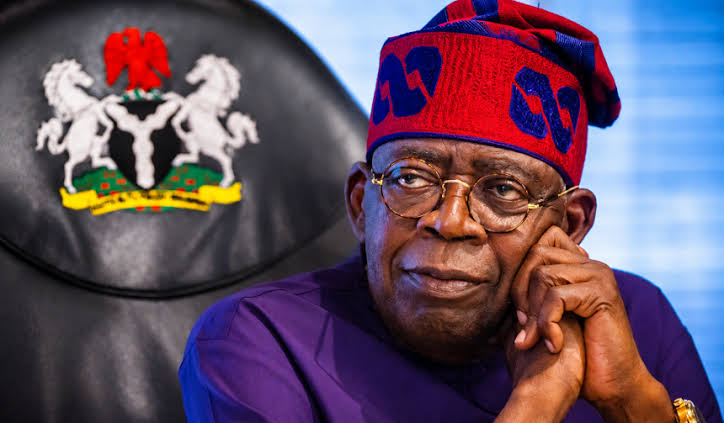
Nigeria’s political landscape is gradually beginning to take shape ahead of the 2027 general elections following the constitution of the All Progressives Congress (APC) Presidential Campaign Council.
In a major announcement released on Saturday, August 22, 2026, President Bola Ahmed Tinubu unveiled a broad campaign structure that brings together influential political leaders, serving and former governors, lawmakers, party officials, communication experts, legal practitioners and strategists from across the country.
The newly constituted council places President Tinubu at the centre of the campaign machinery as chairman, with Vice President Kashim Shettima serving as vice chairman. The structure also assigns critical responsibilities to some of the most prominent figures within the APC, including former Zamfara State Governor Senator Abdulaziz Yari, who will serve as the Director-General of the campaign, and Imo State Governor Hope Uzodimma, who has been appointed secretary.
The announcement signals the beginning of what could become one of the most important political mobilisation efforts in Nigeria as the ruling party prepares for the January 2027 elections.
Tinubu and Shettima Take Charge of the Campaign Council
As chairman of the APC Presidential Campaign Council, President Bola Ahmed Tinubu will lead the party’s campaign efforts as it seeks to retain power in the next presidential election.
Vice President Kashim Shettima will serve alongside him as vice chairman, while APC National Chairman Professor Nentawe Yilwatda has also been assigned the position of vice chairman.
The arrangement places the country’s top political leadership, the national leadership of the ruling party and key campaign strategists within a single structure.
For the APC, the campaign council will not simply be responsible for organising rallies and political events. It will be expected to coordinate a nationwide political strategy, communicate the party’s record in government, mobilise supporters, monitor elections and respond to the activities of opposition parties.
The inclusion of senior political figures also demonstrates the importance the party is placing on building a campaign organisation capable of reaching every geopolitical zone of the country.
Abdulaziz Yari Named Director-General
One of the most significant appointments in the campaign structure is that of Senator Abdulaziz Yari as Director-General.
The former Governor of Zamfara State and influential political figure will be expected to coordinate the day-to-day activities of the campaign council and ensure that its various directorates work towards a common objective.
The position of Director-General is traditionally one of the most important roles in any major political campaign. While the presidential candidate and campaign chairman provide overall leadership, the Director-General is expected to help translate political strategy into practical action.
This includes coordinating stakeholders, managing campaign structures, resolving internal challenges and ensuring that mobilisation efforts are effectively implemented across the country.
Yari’s appointment therefore places a major responsibility on his shoulders as the APC begins preparing for what is expected to be a highly competitive political contest.
Working closely with him will be Governor Hope Uzodimma of Imo State, who has been appointed secretary of the campaign council.
The appointment of Uzodimma gives the South-East a significant role within the central administrative structure of the campaign.
A Campaign Structure Spread Across Nigeria
One notable feature of the APC Presidential Campaign Council is its attempt to create a broad national structure.
The party has assigned responsibilities across Nigeria’s six geopolitical zones, particularly within the election planning, coordination and monitoring directorate.
James Abiodun Faleke, who played an important role in the APC’s previous presidential campaign, has returned as Deputy Director-General for Election Planning, Coordination and Monitoring.
He will work with zonal directors including Senator Olushola Adeyeye for the South-West, Dr Ngozi Olejeme for the South-South, Senator Uche Ekwunife for the South-East, Muntaqha Rabe for the North-West, Ahmed Muhammed Ketso for the North-Central and Senator Sani Danladi for the North-East.
This structure reflects the importance of local political organisation in Nigerian elections.
Winning a presidential election requires more than national popularity. Political parties must build strong structures at the state, local government and grassroots levels. They must understand local political realities and identify the issues that matter most to voters in different parts of the country.
The appointment of zonal directors is therefore expected to help the APC coordinate its campaign activities more effectively across Nigeria’s diverse political environment.
Akpabio, Abbas and Buni Take Key Roles
The campaign council also includes some of the country’s most powerful political office holders.
Senate President Godswill Akpabio, Speaker of the House of Representatives Tajudeen Abbas and Yobe State Governor Mai Mala Buni have been appointed as Deputy Directors-General for the campaign across the southern and northern parts of the country.
They will work alongside Senator Bamidele Opeyemi and Senator Jibril Barau in the respective zones.
Their inclusion is politically significant because it brings together leaders from both the executive and legislative arms of government, as well as influential figures from different regions.
Senator Adams Oshiomhole has also been assigned the role of Deputy Director-General in charge of mobilisation.
Mobilisation will be one of the most important aspects of the campaign. The APC will need to maintain the support of its existing political base while also reaching new voters and strengthening its presence in areas where the party may face stronger opposition.
The President’s Chief of Staff will also serve as Deputy Director-General for Administration, while the campaign’s election planning structure will coordinate preparations and monitoring activities across the federation.
Legal and Election Planning Structures Take Shape
A major national election requires more than political rallies and public speeches. Behind every campaign is a complex legal and administrative structure.
The APC has appointed Muiz Adeyemi Banire to lead the legal directorate as director, with Dr Liman Hassan and Babatunde Ogala serving as deputies.
Other members of the legal structure include Prince Lateef Fagbemi, former Governor Ibrahim Shema, Worgu Boms and Dr Kingsley Tochukwu Udeh.
The legal directorate will likely play an important role in advising the campaign organisation on electoral regulations, nomination processes, campaign activities and other legal matters connected with the election.
Meanwhile, the election planning, coordination and monitoring directorate has been structured to include representatives across the six geopolitical zones.
Ms Stella Okotete, Engineer Abdullahi Garba Ramat and Audu Maikori have been appointed as secretaries of the election planning directorate.
The early establishment of these structures suggests that the APC is seeking to begin preparations well ahead of the election period.
Media and Strategic Communication at the Centre
Modern political campaigns are increasingly fought in the media.
Television, radio, newspapers and physical campaign events remain important, but digital communication has transformed how political messages are delivered and received.
Recognising this reality, the APC has created a large media and strategic communication structure.
The Minister of Information and National Orientation, Mohammed Idris Malagi, will serve as Coordinating Director for Media and Strategic Communication.
He will work alongside prominent figures including Dele Alake, Bayo Onanuga and Lanre Issa-Onilu.
Other members of the media directorate include Tunde Rahman, Sunday Dare, Daniel Bwala and Felix Morka, who have been assigned as Coordinating Deputy Directors.
Abdulaziz AbdulAziz, Temitope Ajayi, Arabinrin Aderonke and Frederick Nwabufor will serve as Coordinating Secretaries.
The campaign has also appointed five spokespersons, led by Dele Alake. Other spokespersons include Alwan Hassan, Ayobami Oyalowo, Kemi Asekun-Shittu and Adamu Fanda.
The size of the communication team highlights the importance the APC is placing on controlling its political message and communicating directly with Nigerians.
The Growing Importance of New Media
One of the most notable appointments is that of Segun Dada as Director of New Media, a role he also performed during the 2022 campaign.
Solomon Arowolo will serve as Secretary for New Media.
The digital space is expected to play an even greater role in the 2027 elections than it did in previous election cycles.
Nigerians increasingly receive political information through social media platforms, online news websites, blogs, video platforms and messaging applications.
This creates opportunities for political parties to reach voters directly, but it also creates challenges.
Information moves faster than ever before. Political campaigns must respond quickly to public concerns, misinformation, criticism and emerging issues.
A single video, statement or social media post can influence public discussion within hours.
The appointment of a dedicated new media leadership team suggests that the APC intends to make digital communication a central part of its campaign strategy.
A Council of Political Veterans and Advisers
President Tinubu will also work with a body of experienced advisers within the campaign council.
The advisory group includes Chief Bisi Akande, Chief Segun Osoba, Senator Rochas Okorocha, Senator Abdullahi Adamu and Senator Florence Ita Giwa.
The inclusion of these senior political figures brings decades of political experience into the campaign structure.
Political campaigns often require a combination of youthful energy, technological innovation and institutional experience.
While younger campaign teams may focus heavily on digital mobilisation and new methods of communication, experienced politicians often bring an understanding of political negotiations, grassroots structures and long-standing relationships.
The APC’s new campaign council appears designed to combine these different strengths.
Tinubu’s Message: Campaign on the Record of Government
Perhaps the most important aspect of the announcement was President Tinubu’s message to members of the campaign council.
The President charged members to work tirelessly to deliver victory for the APC in the January 2027 elections.
He also encouraged the leaders of various directorates to reach out beyond the official list and involve other party members in the campaign effort.
According to the statement, President Tinubu believes his administration has delivered on its campaign promises and placed Nigeria on a path towards economic progress.
The President urged members of the APC to confidently present the government’s achievements to Nigerians as the country moves towards another election cycle.
The message indicates that the APC’s campaign strategy is likely to focus significantly on the record of the Tinubu administration.
This will make governance, economic policy, infrastructure, security, employment and other major national issues central to the political debate.
For the APC, the challenge will be to convince Nigerians that its policies and programmes have produced meaningful progress.
For opposition parties, the campaign period will provide an opportunity to challenge the ruling party’s record and present alternative visions for the country.
What the New Campaign Council Means for 2027
The constitution of the APC Presidential Campaign Council represents an important early development in Nigeria’s journey towards the 2027 general elections.
By bringing together political leaders from different regions, branches of government and sectors of public life, the APC is creating a large organisational structure intended to support its electoral ambitions.
However, the size of the campaign council alone will not determine the outcome of the election.
Ultimately, political campaigns will be judged by Nigerians based on issues that affect their everyday lives.
The economy, cost of living, jobs, security, infrastructure, education and healthcare are likely to remain important topics in the national conversation.
Political parties will need to explain not only what they have done but also what they plan to do differently.
The APC’s decision to begin building its campaign structure early gives the party time to organise, mobilise supporters and prepare its message.
But it also means that the party’s leaders and government officials will face increased public scrutiny as the election approaches.
The Road to January 2027
With President Tinubu as chairman, Vice President Kashim Shettima as vice chairman, Abdulaziz Yari as Director-General and Hope Uzodimma as secretary, the APC has assembled a broad leadership structure for its presidential campaign.
The involvement of senior figures such as Godswill Akpabio, Tajudeen Abbas, Adams Oshiomhole, Mai Mala Buni, James Faleke, Dele Alake and several others shows that the party is mobilising experienced political and communication figures for the task ahead.
The campaign council now faces the responsibility of transforming this long list of appointments into an effective nationwide political organisation.
As the 2027 elections draw closer, Nigerians can expect increased political activity, stronger debates, nationwide mobilisation and a more intense focus on the achievements and challenges of the current administration.
For now, the APC has made its first major move by unveiling a campaign council that combines political experience, regional representation, legal expertise, election planning and modern media strategy.
Whether this structure will deliver the victory President Tinubu has called for will ultimately be decided at the polls.
But one thing is clear: the road to the 2027 elections has begun to take shape, and the constitution of the APC Presidential Campaign Council marks another significant chapter in Nigeria’s unfolding political journey.