
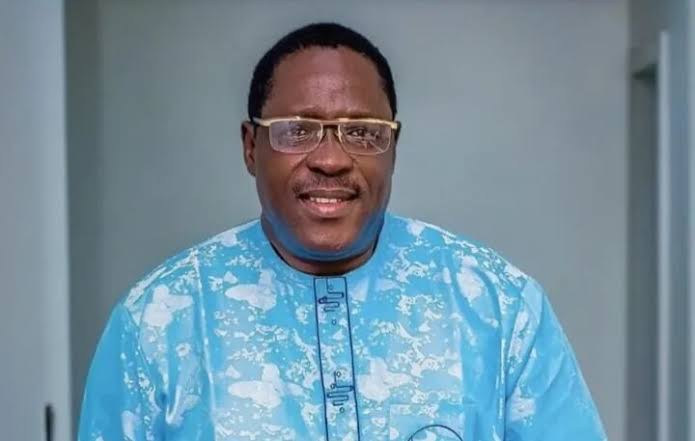
Nigeria’s creative and entertainment industry has been thrown into mourning following the death of veteran Nollywood actor, Taiwo Hassan, popularly known as Ogogo. The legendary Yoruba actor reportedly passed away on Sunday, August 23, 2026, at about 3:00 p.m., after battling stage-four cancer. He was 66 years old.
The news of his death has sent shockwaves across the Nigerian entertainment industry, particularly among lovers of Yoruba movies who grew up watching the powerful, charismatic and unforgettable actor dominate television screens for decades. His passing is not just the loss of a popular actor; it is the departure of a cultural icon, a storyteller, a mentor and one of the men whose contributions helped shape the Yoruba film industry into the global cultural force it has become today.
Reports indicate that Ogogo’s death followed a difficult battle with cancer, which had become public knowledge only days before his passing. His family had appealed for medical assistance after revealing the seriousness of his condition. The veteran actor’s death was subsequently confirmed in reports shared by several Nigerian news platforms, while condolence messages began pouring in from political leaders, colleagues and fans across the country.
A Legend Whose Name Became Bigger Than the Screen
For many Nigerians, the name Taiwo Hassan may not immediately sound as familiar as the name Ogogo. But mention Ogogo anywhere in Nigeria, especially among lovers of Yoruba films, and the memories immediately come alive.
Ogogo was one of those rare actors whose personality and presence made him instantly recognisable. His powerful voice, commanding appearance, unique expressions and ability to completely transform into a character made him one of the most respected actors of his generation.
Whether he was playing the role of a fearless warrior, a traditional ruler, a stern father, a village strongman or a powerful personality in a dramatic storyline, Ogogo brought a level of authenticity that made audiences believe every scene.
He was not simply acting; he was telling stories through his entire being.
For decades, Taiwo Hassan represented an era of Nigerian filmmaking when actors relied heavily on raw talent, storytelling ability and cultural knowledge. Long before the age of social media popularity and viral fame, actors like Ogogo built their reputations through years of dedication, consistency and unforgettable performances.
His name became a brand. His face became familiar in homes across Nigeria and beyond. His performances became part of the memories of millions of people who grew up watching Yoruba movies.
That is why his death is particularly painful.
From Humble Beginnings to Stardom
One of the most inspiring aspects of Ogogo’s life was his journey into the entertainment industry. His story is a reminder that greatness can come from unexpected beginnings.
Before becoming one of the most celebrated faces in Yoruba cinema, Taiwo Hassan reportedly trained and worked as an automobile mechanic and spent years working with the Lagos State Water Corporation while also pursuing his passion for acting. He began acting in the early 1980s and eventually made the courageous decision to pursue entertainment full-time.
That decision would go on to change his life and contribute significantly to the development of Nigeria’s creative industry.
His journey should inspire young Nigerians who are still searching for their purpose. Ogogo did not become a legend overnight. His success was the result of years of work, sacrifice, learning and commitment to his craft.
He came from an era when becoming an actor was not as glamorous as it is today. The Nigerian movie industry was still developing, production budgets were limited and actors often had to work under difficult conditions.
Yet, people like Taiwo Hassan remained committed.
They kept telling Nigerian stories.
They kept promoting Nigerian culture.
They kept entertaining the people.
And today, Nollywood has grown into one of the biggest film industries in the world.
The contributions of pioneers and veterans like Ogogo must never be forgotten.
Ogogo and the Preservation of Yoruba Culture
One of the greatest contributions Taiwo Hassan made to the Nigerian creative industry was his role in promoting and preserving Yoruba culture.
Yoruba films are more than entertainment. They are powerful cultural tools. Through language, dressing, traditional music, proverbs, folklore and storytelling, Yoruba movies have helped preserve aspects of Nigerian heritage for younger generations.
Ogogo was one of the actors who understood this deeply.
His ability to interpret traditional roles made him stand out. He could communicate authority, wisdom, strength and emotion in ways that connected strongly with audiences.
His performances often carried the richness of Yoruba traditions.
For younger Nigerians growing up in cities, and for Nigerians living abroad, Yoruba films became one of the ways they remained connected to their roots. Actors like Ogogo became cultural ambassadors without necessarily carrying official titles.
They took Yoruba stories to the world.
They made the language attractive to younger audiences.
They showed the beauty of traditional dressing, customs and storytelling.
Through his decades-long career, Ogogo helped ensure that Yoruba culture remained visible on Nigerian screens.
That is a legacy that cannot be measured simply by the number of movies he appeared in.
A Career That Spanned Generations
Perhaps one of the greatest achievements of Taiwo Hassan was his ability to remain relevant across generations.
Many actors become popular for a period and gradually disappear from the public eye. But Ogogo remained a recognisable and respected figure for decades.
He belonged to an older generation of actors who helped build the foundation of Yoruba cinema, yet his work continued to introduce him to younger audiences.
His career reportedly stretched for more than four decades, making him one of the most experienced and enduring figures in the industry.
This longevity speaks volumes about his talent.
It takes more than popularity to survive in the entertainment industry for decades.
It requires discipline.
It requires reinvention.
It requires professionalism.
And most importantly, it requires talent.
Ogogo possessed all of these qualities.
He was respected not only because he was famous, but because he had earned his place in the industry.
For younger actors, filmmakers and content creators, his career offers an important lesson: true success is not just about becoming popular. It is about building a legacy that can survive generations.
The Painful Battle With Cancer
The final days of Taiwo Hassan’s life were particularly emotional for Nigerians.
Only recently, members of his family had publicly spoken about his health challenges and appealed for assistance as he battled stage-four cancer. Reports at the time also highlighted concerns surrounding his treatment and the advanced nature of the illness. Medical experts cautioned the public against misunderstanding reports about treatment decisions and noted that advanced cancer patients may sometimes transition to palliative care when certain treatments are no longer appropriate or effective.
Then came the heartbreaking news.
On Sunday, August 23, 2026, Ogogo reportedly passed away at about 3:00 p.m. at the age of 66. Reports also indicated that burial arrangements were announced for his hometown in Ilaro, Ogun State.
His death has once again brought attention to the growing burden of serious illnesses and the importance of accessible specialist healthcare in Nigeria.
It has also reminded Nigerians of something deeply human: fame, wealth, success and public admiration do not make anyone immune to life’s greatest battles.
Behind the legendary actor that millions saw on television was a father, a family man and a human being fighting for his life.
His family’s pain is unimaginable.
For his children, relatives, friends and colleagues, this is not simply the death of a celebrity. It is the loss of someone they loved.
As Nigerians mourn the icon, it is important to extend sincere condolences to the Hassan family and respect their grief during this difficult period.
A Monumental Loss to Nigeria’s Creative Industry
Following his death, tributes have begun pouring in from across the country.
Political leaders and members of the entertainment community have described his passing as a major loss. Senator Solomon Adeola, popularly known as Yayi, described Ogogo’s death as a monumental loss to Nigeria’s creative and entertainment industry, noting that the actor’s passing was also a loss to his family, Ogun State and the country as a whole.
That description is accurate.
Nigeria’s creative industry is losing many of the individuals who built the foundation on which the current generation stands.
Today, young actors can become famous through streaming platforms, social media and digital content. Nigerian films can now reach audiences in different parts of the world within minutes.
But before this global recognition, there were men and women who worked tirelessly to build the industry.
Ogogo was one of them.
He was part of a generation that made Yoruba cinema commercially successful.
He helped create a market for Nigerian stories.
He helped prove that stories told in indigenous languages could entertain millions of people.
His contribution helped create opportunities for the actors, producers, directors and filmmakers who came after him.
Therefore, when a legend like Ogogo dies, the industry must do more than simply post photographs and emotional messages.
His story should be documented.
His movies should be preserved.
His contributions should be studied.
Young actors should learn from his career.
Nigeria must develop a stronger culture of celebrating its creative pioneers while they are still alive and preserving their legacies after they are gone.
The Legacy Will Live On
Death may take a person away physically, but it cannot erase the impact they have made.
Taiwo Hassan may be gone, but Ogogo will remain.
He will remain in the movies he acted.
He will remain in the characters he brought to life.
He will remain in the memories of millions of Nigerians.
He will remain in the history of Yoruba cinema.
And he will remain in the stories that will be told about the generation of actors who helped build Nollywood.
Every time an old Yoruba movie featuring Ogogo is played, new audiences will discover his talent.
Every time a young actor studies the great performers who came before them, his name will be mentioned.
Every time the history of Nigerian indigenous cinema is discussed, Taiwo Hassan’s contribution will have a place.
That is the true meaning of legacy.
Farewell to a Nigerian Icon
Nigeria has lost a creative giant.
The Yoruba movie industry has lost one of its strongest pillars.
Nollywood has lost a veteran whose talent entertained generations.
And millions of fans have lost an actor whose name became synonymous with unforgettable storytelling.
Taiwo Hassan “Ogogo” was more than an actor. He was an institution. He represented an era, a culture and a generation of performers who gave their lives to the growth of Nigerian entertainment.
His death at 66 is heartbreaking, particularly because Nigerians had only recently learned about the seriousness of his battle with cancer.
But while the industry mourns, we must also celebrate.
We must celebrate the life he lived.
We must celebrate the career he built.
We must celebrate the culture he represented.
And we must celebrate the generations he inspired.
The creative industry may have lost a legend, but it has gained a permanent legacy.
Farewell, Taiwo Hassan.
Farewell, Ogogo.
Your voice may be silent now, and the cameras may no longer capture your performances, but the stories you helped tell will continue to live.
Nigeria will remember you.
Yoruba cinema will remember you.
And generations yet unborn will continue to discover the legend known simply as Ogogo.
May his soul rest in perfect peace.