For years, Nigerians have been told that the country is blessed with enormous natural resources, particularly crude oil. Yet, despite being one of Africa’s major oil-producing nations, Nigeria has often struggled to translate its oil wealth into widespread prosperity. Instead, the country has faced declining production, pipeline vandalism, crude oil theft, foreign exchange shortages and an economy that has left many businesses and citizens frustrated.
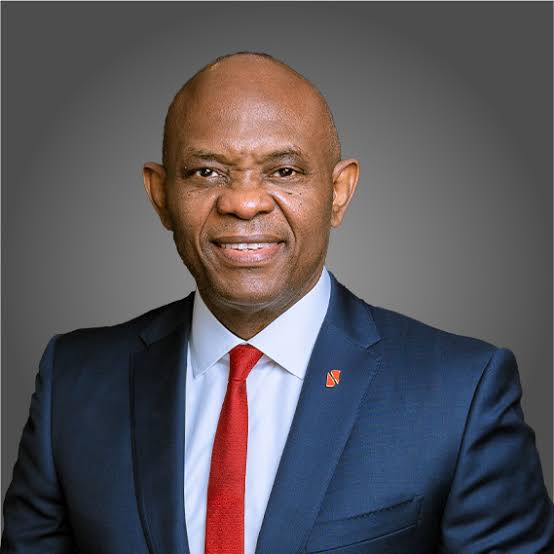
That is why the recent comments attributed to business leader Tony Elumelu have generated significant attention.
“I am not a politician, so I’ll speak my truth. Until 2023, we were losing 97% of our oil production to theft. Today, losses are down to 2%, we retain 98%, and we no longer need to know anyone at the CBN to access dollars.”
Coming from someone who is directly involved in Nigeria’s business and energy sectors, the statement is significant. Elumelu is not simply commenting as an observer. Through his investments in the oil and gas sector, he has repeatedly spoken about the devastating impact of crude oil theft on businesses and the Nigerian economy.
His comments also raise an important national conversation: Are some of Nigeria’s economic reforms beginning to produce results that are not yet widely recognised by the general public?
The Days When Oil Theft Almost Destroyed Production
To understand the significance of Elumelu’s statement, Nigerians must remember just how serious crude oil theft became.
In previous years, oil theft was not merely a minor problem involving a few criminals breaking into pipelines. It became a massive economic crisis.
Elumelu had publicly raised alarms about the situation in 2022, questioning how Nigeria could continue producing oil while allegedly losing more than 95% of production from some affected assets and infrastructure to thieves. At the time, he argued that oil theft was one of the major reasons Nigeria struggled to meet production targets.
The consequences were enormous.
Oil is one of Nigeria’s most important sources of foreign exchange and government revenue. Therefore, when crude oil is stolen or production facilities are shut down because pipelines are unsafe, the country does not simply lose barrels of oil. It loses money that could support government budgets, infrastructure, healthcare, education and other critical sectors.
In 2022, Elumelu said Nigeria lost billions of dollars to crude oil theft, describing the crisis as a major national threat.
Imagine owning a business that produces 100 products every day but losing 97 of them before they reach the market. No company could survive such a situation for long.
That was essentially the picture Elumelu painted about Nigeria’s oil industry.
And this is why his latest assessment deserves attention.
From 97% Losses to Just 2%
According to Elumelu’s account, the situation has changed dramatically.
He said that before the current administration came into office in 2023, some operations were losing as much as 97% of production to theft. He now says losses have fallen to about 2%, meaning approximately 98% is being retained.
A similar account was reported during remarks in 2025, where Elumelu said that after monthly production measurement and reconciliation, losses had dropped significantly compared with the levels experienced before 2023.
If these figures are sustained, the implications for Nigeria are enormous.
A reduction in oil theft means:
- More crude oil reaches legitimate export channels.
- Oil companies have greater confidence to invest.
- Government revenue can potentially improve.
- Nigeria can increase its foreign exchange earnings.
- Oil-producing communities may experience fewer disruptions caused by illegal activities.
- International investors may begin to see Nigeria as a more predictable environment.
This is particularly important because investment depends heavily on confidence.
No serious investor wants to put billions of dollars into infrastructure only to discover that most of the product is being stolen before it reaches the market.
For years, crude oil theft created exactly that kind of environment.
Elumelu himself previously linked oil theft to the decisions of international oil companies to reduce or divest some onshore operations in Nigeria. In 2024, he argued that the government and security agencies should be able to identify those responsible for large-scale crude theft, particularly when vessels and sophisticated logistics are allegedly involved.
Therefore, if Nigeria has genuinely reduced losses to the level now being discussed, it represents more than an improvement in security. It could represent a major change in the investment environment.
“I Am Not a Politician” — Why That Statement Matters
Perhaps the most interesting part of Elumelu’s comment is his insistence that he is not speaking as a politician.
“I am not a politician, so I’ll speak my truth.”
That statement matters because Nigeria is deeply politically divided.
Almost every policy, reform or government achievement is immediately viewed through political lenses. Supporters celebrate everything. Opponents dismiss everything.
As a result, Nigerians sometimes struggle to have honest conversations about what is actually working and what is not.
Elumelu’s position appears to be that progress should be acknowledged when it happens, regardless of political affiliation.
This does not mean Nigeria’s problems have disappeared.
Far from it.
Millions of Nigerians are still struggling with the cost of food, transportation, electricity, housing and other essentials. Businesses continue to face high operating costs. The naira remains a major concern for citizens and investors.
But acknowledging these challenges should not prevent Nigerians from also examining areas where genuine improvements may be happening.
A country can be struggling in one area while making progress in another.
Both realities can exist at the same time.
The Foreign Exchange Question: “You Don’t Need to Know Anyone at CBN”
Another important part of Elumelu’s statement concerns access to foreign exchange.
For many years, one of the biggest complaints from Nigerian businesses was the difficulty of accessing dollars.
Companies needed foreign exchange to import equipment, purchase raw materials, pay international service providers and meet obligations abroad. However, access to dollars often became difficult because of shortages, multiple exchange rates and bureaucratic processes.
For some businesses, there was a widespread perception that relationships and connections could determine who gained access to foreign exchange.
That created uncertainty.
Businesses could not effectively plan if they did not know whether they would be able to access dollars when needed.
Elumelu’s comment that businesses no longer need personal connections at the Central Bank of Nigeria to access foreign exchange suggests that he sees improvements in the structure and accessibility of the FX market.
This is important because a functional foreign exchange market is one of the foundations of a modern economy.
Investors do not simply want to make profits. They also want to know whether they can access and move foreign currency through transparent and predictable systems.
When the FX system becomes more transparent, businesses can plan better.
When businesses can plan better, they are more likely to invest.
When investment increases, jobs and economic activity can follow.
Of course, access to foreign exchange and the cost of foreign exchange are two different issues. Nigerians will rightly continue asking whether the exchange rate is affordable and whether the benefits of reforms are reaching ordinary citizens.
Those questions remain valid.
But the question of how dollars are accessed is also important.
Nigeria Needs More Honest Economic Conversations
One of Nigeria’s biggest challenges is that public conversations often become too emotional and political.
If someone praises the government, people may immediately assume the person has been paid.
If someone criticises the government, others may accuse the person of being an opposition supporter.
But national development requires a more mature approach.
Nigeria should be able to say:
“This policy is working.”
“This policy is not working.”
“This sector has improved.”
“This sector still requires urgent intervention.”
That is how serious countries measure progress.
The identity of the person making the statement should not always matter more than the facts behind the statement.
Tony Elumelu’s comments should therefore encourage Nigerians to ask deeper questions.
What exactly changed in the oil sector?
What security measures were introduced?
How sustainable are the improvements?
Has the reduction in theft translated into higher national revenue?
Are more investors returning to the sector?
How transparent is the foreign exchange market now compared with previous years?
Most importantly, how will these improvements eventually affect the lives of ordinary Nigerians?
Because at the end of the day, economic statistics only become meaningful when citizens begin to feel the impact.
Progress Must Be Sustained
Nigeria has seen temporary improvements before.
The real test is sustainability.
Reducing crude oil theft for a few months is good. Maintaining low theft levels for years is much better.
Making foreign exchange more accessible today is important. Building a transparent and predictable FX market that survives political changes is even more important.
Nigeria must move away from personalities and build strong institutions.
The country’s economy should not depend on who knows whom.
A business should not need a powerful connection to access opportunities.
An investor should not need political protection to operate safely.
An oil company should not lose most of its production to criminal networks.
And a young entrepreneur should not feel that success is only possible through connections.
That is the bigger message behind the kind of transformation Elumelu is describing.
The Bigger Picture for Nigeria
Nigeria has everything required to become one of the world’s leading economies.
The country has oil, gas, agriculture, technology, a large population, creative talent and one of Africa’s strongest entrepreneurial cultures.
But resources alone do not create prosperity.
Systems do.
Security does.
Transparency does.
Accountability does.
Investment does.
And most importantly, consistent leadership does.
If Nigeria can genuinely protect its oil infrastructure, increase legitimate production, improve investor confidence and create a more transparent foreign exchange environment, the country could unlock enormous economic opportunities.
However, Nigerians must continue demanding accountability.
Progress should be acknowledged.
Failures should also be challenged.
That is not opposition.
That is patriotism.
Conclusion
Tony Elumelu’s statement offers an interesting perspective on Nigeria’s current economic journey.
His claim that oil production losses have fallen dramatically from around 97% in the worst affected circumstances before 2023 to roughly 2% today represents a potentially major turnaround for the sector. His comments about improved access to foreign exchange also point to changes that could matter greatly to businesses and investors.
But Nigeria’s journey is far from complete.
The country still faces serious economic challenges. Citizens are still asking difficult questions about inflation, the cost of living, unemployment and the value of the naira.
Those questions should continue.
At the same time, Nigerians should not become so politically divided that they are unable to recognise progress when it occurs.
Perhaps the most important lesson from Elumelu’s words is simple: Nigeria needs more truth and less political noise.
If something is working, let us acknowledge it.
If something is failing, let us fix it.
If reforms are producing results, let us strengthen them.
And if Nigerians are still suffering, let us not pretend that statistics alone are enough.
The ultimate goal should not simply be to say that Nigeria is improving.
The ultimate goal should be for Nigerians to actually feel that improvement in their businesses, their incomes, their communities and their daily lives.
That is when economic transformation will truly mean something.
And perhaps that is the conversation Nigeria needs to have now—not whether we should support one politician or oppose another, but whether the country is finally building systems strong enough to protect its wealth, attract investment and create prosperity for its people.